/f/102932/1240x697/b9497ecaa4/mcdonald-s-manchester-mcplant.png)
HFSS: OOH should be part of the solution, not the scapegoat
Talon CEO offers her view in response to the UK government's move to potentially extend food ad restrictions
27 July 2026
Recent calls from MPs to introduce a blanket ban on outdoor advertising for High Fat Salt and Sugar (HFSS) products reflect an ambition that most of us support: improving public health and tackling obesity. The challenge is real and it deserves serious attention, but it also deserves careful consideration. As policymakers consider further restrictions, it’s worth asking whether removing one of the most visible, trusted and public media channels is the best approach – or whether OOH could play a more effective role in encouraging healthier choices.
Importantly, OOH is not an industry resisting regulation. The channel has consistently adapted to meet changing societal expectations while remaining one of the most transparent, accountable and trusted advertising channels available. Over recent years, the sector has successfully navigated school proximity restrictions, local authority HFSS policies and a growing number of landlord led limitations. Media owners, agencies and advertisers have repeatedly evolved planning, investment and creative strategies to ensure compliance while continuing to deliver value for brands and audiences. Unlike many media channels, OOH operates in full public view, it is highly regulated, highly visible and subject to clear standards. It also has a long history of supporting public good, from government health campaigns and road safety initiatives to vital public messaging during the pandemic. Not to mention how OOH gives back much of its revenue to support public infrastructure, community services and charitable causes, with 46p in the £1 going back into the community.
"Tobacco consumption did not decline because of a single intervention. Change happened through a combination of taxation, product regulation, packaging reforms, public health education, restrictions on use and advertising controls working together over many years. Obesity requires the same joined-up thinking."
Sue Frogley, CEO, Talon
Nobody would argue that advertising has no influence. Clearly it does otherwise we’d all be out of a job, and we wouldn’t be having this debate. But obesity is shaped by a complex combination of economic, social, educational and lifestyle factors, far more complex than any single advertising channel can explain. What I think is being overlooked as a positive in this discussion is OOH's proven ability to influence behaviour in the real world, for good. It reaches almost the entire UK population every week and can connect with people at the very moment that decisions are being made, whether that is choosing public transport, supporting a charity, engaging with a health campaign or making a food or drink purchase. That matters because the conversation should not simply be about what we remove from public spaces, but how we harness the influence of those spaces to support healthier outcomes.
Recent parliamentary reports rightly highlight the scale of the challenge and the need for action but reducing the debate to OOH risks oversimplifying an issue that requires a much broader solution. Less healthy food and drink products will continue to exist because consumer demand will continue to exist. The question is not whether people will encounter these products, but whether we want to influence positive choices within that reality or simply remove one of the tools that can help reshape behaviour.
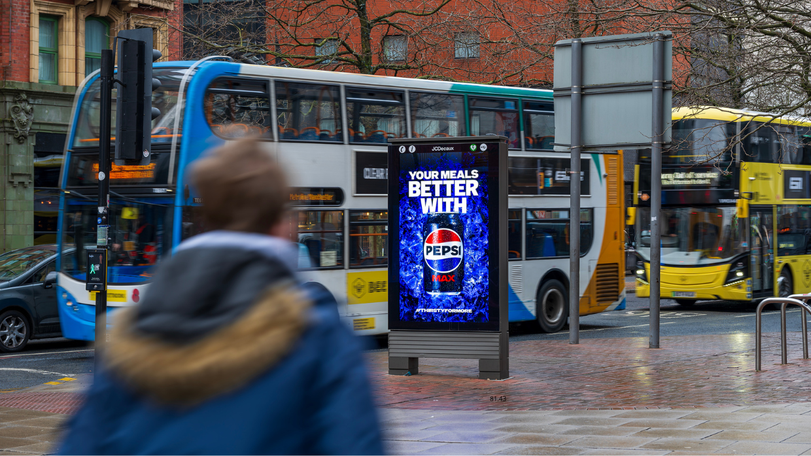
Instead of focusing solely on restriction, we should be exploring how OOH can contribute more actively to education and healthier decision making. Public spaces are already being used to promote lower sugar alternatives, healthier menu choices and reformulated products. Imagine greater collaboration between brands, public health bodies and local communities to continue to deliver relevant behavioural nudges in the places where they can have the greatest impact.
The contextual nature of OOH makes it uniquely suited to this role. Messaging can be tailored geographically, aligned with local priorities and delivered close to the point where decisions are made. Rather than asking how we remove food and drink brands from public view altogether, we should be asking how we encourage them to use public space differently and more responsibly.
History also gives us an important lesson: meaningful public health progress rarely comes from advertising restrictions alone. Tobacco consumption did not decline because of a single intervention. Change happened through a combination of taxation, product regulation, packaging reforms, public health education, restrictions on use and advertising controls working together over many years. Obesity requires the same joined-up thinking.
The challenge deserves urgency, it deserves action, and it deserves collaboration between policymakers, health experts, brands and media owners. But making OOH the latest battleground risks overlooking something important, this is a medium that has repeatedly demonstrated its ability to adapt, operate responsibly and influence behaviour at scale.
The real opportunity is not to remove OOH from the conversation but to use it more effectively. If our shared goal is to help people make healthier choices and deliver better public health outcomes, OOH should part of the solution, not the problem.
Share


