/f/102932/1240x697/6b1e4d8dd4/moss-the-corner.jpg)
The Corner Puts One Studio to Work
With its new proposition, the agency is betting on a leaner, more integrated way of working with clients. Its latest campaign for Moss suggests the bet is paying off
18 May 2026
There’s a particular kind of agency leader (and holding company chief) who still talks as if the old agency model can be patched up with a few efficiencies, a bit of AI, and highfalutin conversations about being "transformation agents". Neil Simpson isn't one of them.
The Corner, the agency he co-founded in January 2012, has spent the last 18 months doing something more radical yet practical: stripping out overheads, ditching the office, shrinking the layers and rebuilding the business around a smaller, senior team, designed to get closer to clients and work more fluidly with in-house resource.
But this wasn't just about a series of cutbacks, it was a decision to make a wholesale shift, and point the agency in an entirely new direction. “We just thought there needs to be a more fundamental change to this,” he says.
Neil Hourston, chief strategy officer and co-founder adds “the reality is, clients want more senior people, closer to their business, helping shape and influence much more than just advertising. Yes, they’re building internal capabilities, but they still want strategic help and creative leadership. And they want it within reach, and at the right cost. This was the problem we needed to solve”.
So The Corner decided to, in Simpson’s words, “blow up the old model” and launch a new proposition - One Studio.
The ambition is a new shared way of working, that collapses the old divide between external agency and internal client team, in order to remove barriers, deliver ideas in real time, and take collective responsibility for output. “We thought we’re not going to have tiers and tiers of people,” says Simpson. “We’re going to have fewer, better, more senior people, working as close as possible to our clients’ business.”
As part of the new One Studio approach, they created the idea of “nesting”. Embedding The Corner’s talent inside the client business. “It’s not about going native and just doing in-house,” says Simpson. “It’s a hybrid. We’re not replacing internal capability; we’re supplementing it where it’s appropriate.”
Tom Ewart, The Corner's chief creative officer and co-founder, says the model is less about structure for structure’s sake and more about dealing with the way brands now actually operate.
“You’ve got campaigns, ongoing, but then you’ve got always-on content, social, influencer, PR. Things moving every day, sometimes within hours,” he says. “The challenge isn’t just making it, it’s holding it together. And you can’t do that from a distance. The nesting thing allows you to be much closer to all those conversations.”
All of which sounds sensible enough in theory. But agency theories on structural models are ten a penny, particularly right now. The real question is what kind of work the model produces.
Step forward Moss, the retailer formerly known as Moss Bros - famous (a little unfairly perhaps) as the destination for wedding suit hire. The menswear retailer has now become the clearest proof point yet for The Corner’s reinvention.
“This new model, this new way of working, Moss kind of demands it of us,” says Ewart. “It’s always on. It’s story-led. It works closely with creators. It’s results-driven. And it’s pushed us to change and be the agency we want to be.”
That makes the new Moss campaign, which breaks today (18 May), more than just a piece of work. It is also a manifestation of what The Corner now thinks an agency is for, how it operates, and what it believes.
“Moss Bros had been steadily reworking itself, over the last two years, into a broader menswear offer, that includes casualwear, tailoring and a more contemporary retail identity” said Hourston, but while the business had changed, perception had lagged. “You might visit once a year, to hire something for a wedding. The challenge was to contemporise a brand that’s well known on the high street, but dusty.”
The target audience, he says, was younger men who might already be shopping at Reiss or Zara but would never instinctively think of Moss unless they needed something formal. The job, then, was not simply to advertise some clothes. It was to shift the emotional frame of the brand, to make it feel more confident, more relevant and less like the place you dragged yourself before a wedding.
The Corner’s response was to create an internal brand platform for Moss built around the phrase “Men of Style and Substance”. A clever, neat acronym, and strategic anchor for the work.
In One Studio terms, it is the sort of platform that can run across seasons and channels, show up in campaigns, drive always-on output, inform creator partnerships and come to life in-store and on social.
And the campaign thought is straightforward enough. Style is not just about looking immaculate, it is about what you do in the clothes. The most appealing men are not pristine; they have a bit of life on them. “It’s not just about fetishising the clothes,” says Ewart. “The clothes are great. But if it’s linen, crease it. If it’s a loafer, get a scuff on it. That’s ok. It’s about living.”
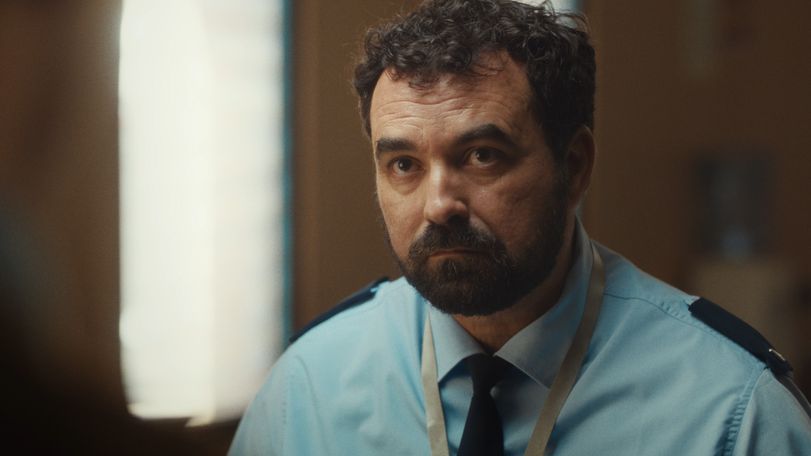
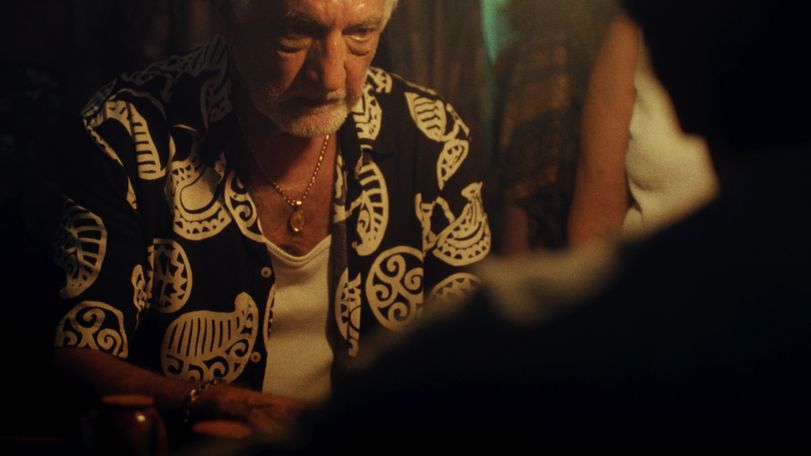
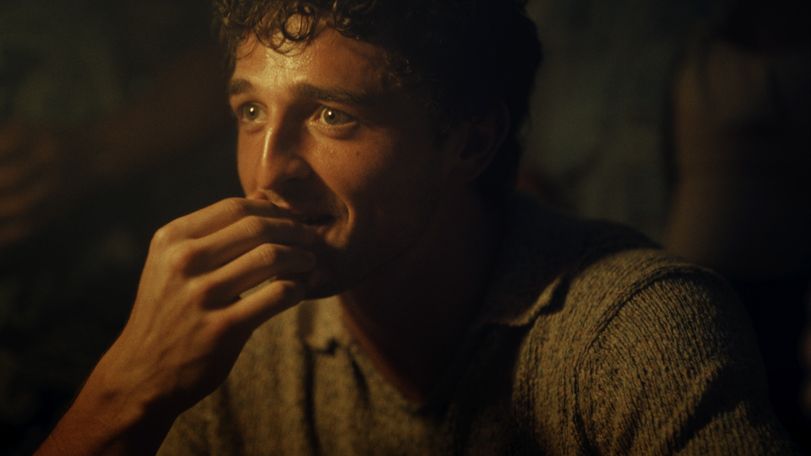
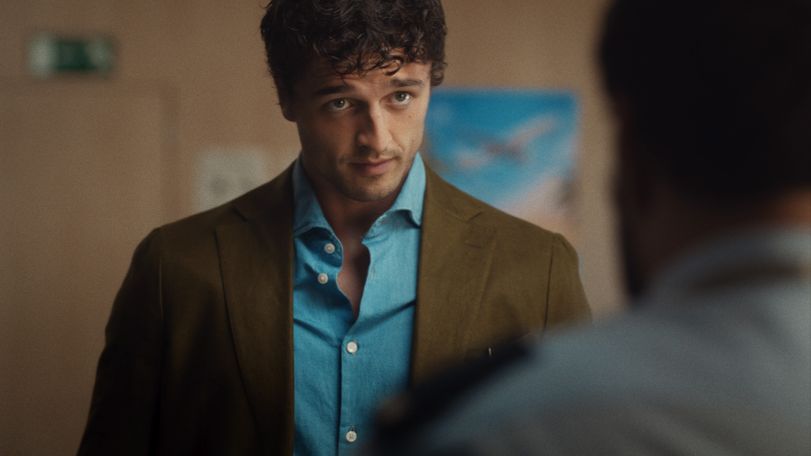
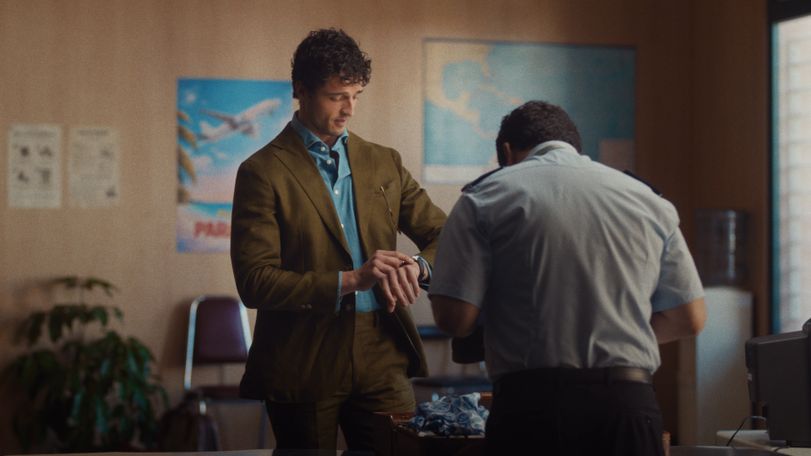
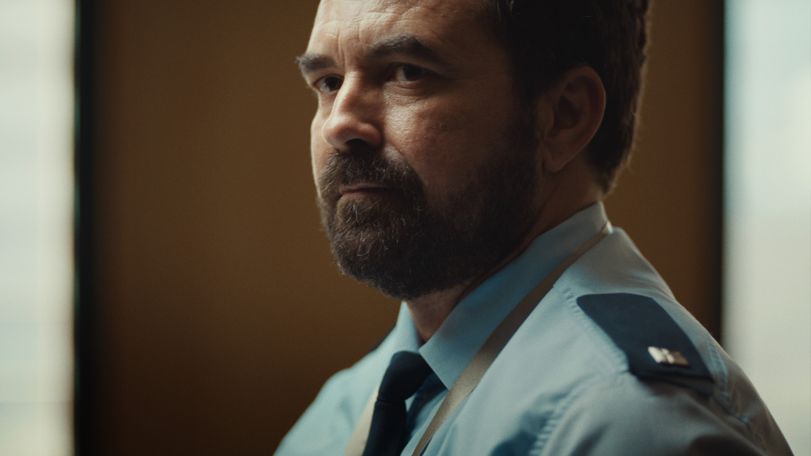
Built around the line 'Bring Back Stories', the new campaign presents Summer not as a glossy fashion fantasy, but as something to get stuck into. The hero film follows a lead character who is less mannequin than charmer-on-the-loose: jumping off cliffs, drinking, flirting, travelling and generally wearing the clothes as though they were bought to be used rather than admired from a respectful distance.
It gives the work a pulse that menswear advertising often lacks. Not because it is trying too hard to be cinematic, but because it is less stiff than the category usually allows. That owes something to the casting. The lead, Alberto, was chosen not simply because he looked good in the clothes, but because he felt like the embodiment of the idea.
“We were looking for a model who could act, which is quite unusual,” says Ewart. “This guy was perfect because he literally was a man of style and substance. He looked great, but he was also really intelligent and interesting.”
The point, though, is that it does not stop at the film and this is where One Studio becomes more visible still. The campaign stretches into digital outdoor, social, influencer and in-store, with a central device - a travelling case - running through it all. “That’s all part of presenting a modern campaign idea,” says Simpson. “The case becomes a symbol that can run through everything.”

1/11
2/11
3/11
4/11

5/11

6/11

7/11

8/11
9/11
10/11
11/11


It is the sort of detail that separates a campaign from a content plan. The case can live in the film, show up in store, be used in influencer activity and help stitch the whole thing together. That matters when brands now have to turn up across so many different surfaces, often with different teams working on each bit.
Simpson says the tone has “got confidence”, “a little bit of wit” and “a little bit of comfort in its own skin”. Most importantly, he adds: “They’ve not really had a voice before, and that voice is very different for the category.”
Chris Harris, marketing director at Moss, is pleased with the outcome: “It's been a pleasure working with The Corner over the last year. They've significantly enhanced our storytelling, and with this the quality of our creative output. Particularly impressive is their ability to work with our in-house creative team to create an approach we've called One Studio. You now can't tell whether the work comes from in-house or agency, which is a difficult feat to pull off. Two campaigns in, we're very happy we made the agency choice we did to help us. “
That coherence is really the point. One Studio is not about deciding whether an idea belongs to the agency or the client. It is about creating the conditions in which the best work can happen across every touchpoint, with shared ownership, and far less friction. The Corner is not pretending it needs to make every asset itself. It is trying to provide the strategic and creative shape that stops everything drifting off in separate directions.
Ewart has seen what happens when that shape is missing. “The same thing happened with social,” he says. “Everyone brought social in-house, but then there was no real guidance or theme or angle. We just thought we were seeing it again through influencer and the fragmentation of media.”
Which gets to the more interesting bit of The Corner’s reset. It is not really about reconfiguring for the sake or the fun of it. It is about being closer to clients, clearer in proposition, and harder to ignore. Moreover, it's less about protecting self-interest or pretending the client’s in-house team is either the enemy or the answer to everything.
For The Corner, Moss serves another function too. It shows that One Studio is not just an internal line about organisation design (which could apply to pretty much any agency at the moment). It has resulted in work that feels more joined up because the people making it are closer to the client's business, closer to the decision-making and closer to the pace of modern brand life. As Simpson makes clear, the whole rethink came from a simple client demand: more senior people, more closely engaged in the business.
Which, in an industry still fond of over-explaining itself and often getting itself in a muddle in the process, or fudging restructures altogether, is refreshingly direct.
Share


