/f/102932/7499x5003/fafadb20f5/helia-leadership-team-david-macmilla-lucy-halley-andy-o-carroll.jpg)
Experiences That Hit Different: Helia’s New Vision For CX
The agency's David MacMillan, Andy O’Carroll, and Lucy Halley on why the future of customer engagement lies in creativity, culture, and a genuine sense of belonging
22 July 2026
For a business with a 60-year history, reinvention does not need to arrive with a crash of cymbals. Sometimes it shows up as a sharper conviction, a more confident leadership team, and a clearer sense of what the market has been missing.
And so it is at Helia. Under chief executive David MacMillan, the Havas-owned agency has been busy making a compelling case for why customer experience needs to become more creative, more culturally attuned…and far more human.
In a marketing world still heavily tilted towards acquisition, Helia wants to bring fresh ambition to existing customers; not as names in a database or dots on a journey map, but as people with passions, communities, behaviours and lives beyond the funnel.
The agency’s rallying cry is Experiences That Hit Different. But behind the line is a broader idea: that the future of customer engagement is not more messages, more triggers, or more efficient journeys. It is belonging.
“Helia has always believed that looking after existing customers is one of the smartest things a brand can do,” says MacMillan. “That has been true throughout our 60-year history. But right now, with everything changing in the market, it feels like the moment to make that case much more forcefully.”
For Macmillan and his leadership team of chief creative officer Andy O’Carroll and chief strategy officer Lucy Halley, too much of the marketing pound still goes into acquisition, while the customers who already know, buy from, and engage with a brand are often neglected.
“Of course, brands need to bring in new customers, but we don’t think enough attention, investment or creative energy is being put into the customers they already have,” MacMillan asserts.
And he’s keen to challenge the idea that customer experience (CX) is a scale play, or that customer communications should be seen as lower-order work, pumped through automated engines and optimised into blandness. “Data and technology can enable something special, but they cannot replace the human understanding and creative thinking that make customers actually feel something for a brand,” MacMillan explains.
Yet the challenge has never been more acute. Audiences are harder to reach. Channels are more fragmented. Brands have more data than ever, but often less clarity about how to create genuine connection. “The danger is that the conversation starts with the tech stack, rather than with the customer,” says MacMillan. “We think it has to start with much more fundamental questions. Where are your customers? What matters to them? What makes them tick? How do you create a sense of belonging between those customers and your brand?”
That philosophy sits behind Helia’s next chapter. The agency is talking less about linear customer journeys and more about belonging; less about marketing mechanics and more about the moments where brands can show up with meaning.
Lucy Halley, Helia’s chief strategy officer, puts it neatly: “For me, it means creating experiences that customers genuinely want to engage with and spend time with, rather than experiences they simply tolerate.”
She argues that too much of what the industry creates feels like an interruption.
“It takes up time, space, and attention without giving enough back. We do not want our work to feel like that. We want to create experiences that add real value to people’s lives, whether that is through entertainment, education, utility or something else entirely. And if you add value to customers’ lives, you ultimately add value to the client’s bottom line.”
For Halley, this means seeing people as more than segments, demographics, or data points. “I do think the industry has lost sight of humanity in some ways,” she says. “Technology, AI, data — all of these things are important, but none of them should pull us away from the human being at the centre.”
"We are moving beyond the familiar language of CX and customer engagement and talking about the bigger prize, which is creating a genuine sense of belonging between a brand and its customers>"
David MacMillan, Helia CEO
For Helia, that human being is not a demographic or a segment. They are a member of a subculture – a community defined by shared passions, rituals, behaviours, and identity. It is a distinction that shapes everything about how the agency works. "We study subcultures the way others study markets," says Halley. "Traditional datasets show you what people buy. Subculture thinking shows you what people care about – and that is a completely different starting point for creativity."
The agency uses AI-driven cultural intelligence to map those subcultures: analysing social conversations, search behaviours, web patterns, and communities to understand not just who a brand's customers are, but what worlds they inhabit. The result is insight that no amount of transactional data can surface on its own.
That approach also changes how Helia thinks about channels. The agency is not talking to clients about neat, linear customer journeys anymore, because that is not how people experience brands in the real world. Instead, it thinks in terms of relationships and ecosystems of moments. “Which moments matter most? Where can the brand add most value? What does the customer need from us in that moment, and how can we meet that need brilliantly?” Halley explains.
It is an approach that sits behind work for clients across very different product categories. With Porsche, for example, Helia has been exploring how the brand can connect with subcultures by entering spaces where they already have passion and attention. One answer was film culture.
Andy O’Carroll, Helia’s newly appointed chief creative officer, talks about an experience-first approach in the automotive space. “With Porsche we are looking at how we move across channels and appear in the places and spaces that are relevant to the audience,” he says. “Porsche came up with this lovely idea of bringing together 30 iconic Porsches at Goodwood Festival of Speed, including those which had appeared in films such as Risky Business and Bad Boys in a cinematic experience – Autokino. A one-of-a-kind drive-in cinema and exhibition experience for those lucky enough to be there, but one we were particularly keen to capture and democratise through film and social media.
"The point was not to start with a channel and reverse-engineer a customer journey around it. It was to begin with the audience, the cultural moment, and building an experience that resonated. That is the model we are interested in: an experience at the heart, something that creates a sense of belonging, then an ecosystem of channels around it. Belonging is the invisible thread between a customer and a brand; it is what keeps people coming back, it’s what turns a customer relationship into advocacy. And when you build advocacy, you create greater lifetime value.”
O’Carroll’s arrival is one of the strongest signals of the agency Helia wants to become. As its first CCO, his appointment is intended to raise the creative bar not only within the agency, but across the customer engagement sector.
“We’re really clear that we don’t see creativity as a commodity to be delivered through a tech stack,” MacMillan insists. He sees O’Carroll’s appointment, the reshaped leadership team, and the agency’s emphasis on belonging as all part of the same shift: Helia wants to show that customer engagement can be far more ambitious than the market sometimes assumes. “We are moving beyond the familiar language of CX and customer engagement and talking about the bigger prize, which is creating a genuine sense of belonging between a brand and its customers,” says MacMillan. “Those two things — creativity and belonging — are the clearest signs of where Helia is going.”
O’Carroll says the appeal of joining Helia lay in the leadership team, the client list and, most importantly, the shared ambition. “Helia has brought together people from some of the most influential agencies in this space. There is a real depth of CX experience here, and a lot of like-mindedness. This is a team that has already been behind some of the most awarded work in the sector.” The work he wants to create at Helia is not about making CRM a little sharper or optimisation a little neater. It is about creating work that appears in those moments that matter to people.
For O’Carroll, this shifts customer engagement “from mechanics to meaning”. The work has to be useful, entertaining or engaging. It has to give people a reason to spend time with a brand. “People want more from brands now,” he says. “They consume information and content differently. They want to participate, navigate, and shape the narrative. They want to feel part of something.”
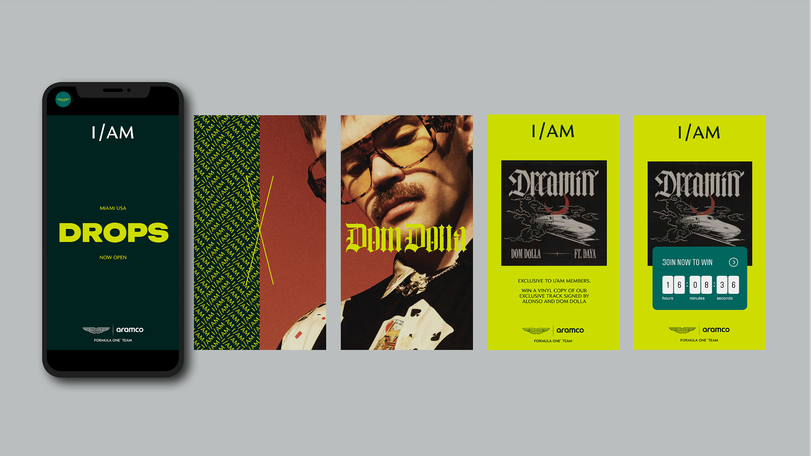
The line between customer engagement, culture and fandom becomes particularly clear in Helia’s work with Aston Martin Formula One (F1). When Aston Martin first came to the agency, it was new on the grid and facing a sport that had historically felt inaccessible to many fans.
“F1 historically had the feel of a closed shop — a world restricted to the privileged few behind a velvet rope, where it was difficult for the majority of fans to meaningfully engage," says Halley.
But the sport was changing. A new generation of fans – younger, more diverse, drawn in through a wave of cultural crossover moments – were arriving with completely different expectations. The traditional F1 fan segment simply did not describe them.
So Helia started with the subcultures instead. Who were these new fans? What communities did they belong to? What did they care about beyond the racing itself? "We weren't trying to reach an audience," says Halley. "We were trying to democratise the grid by connecting with people who were already passionate, but who had never been spoken to in a way that reflected their world."
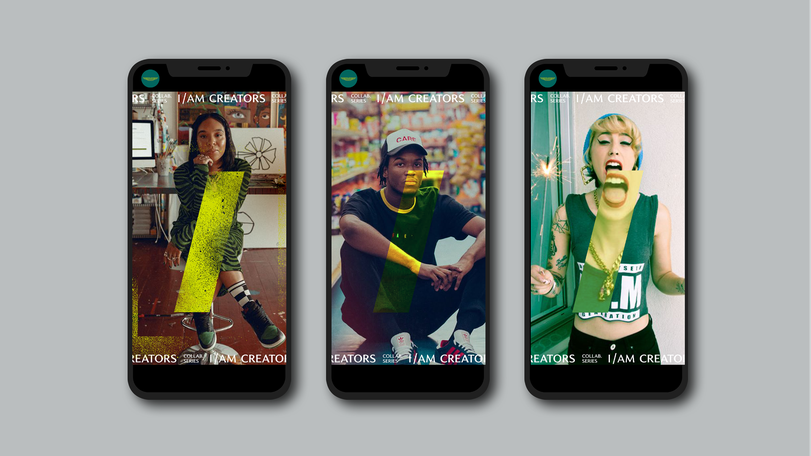
The result was I/AM, Aston Martin F1's fan engagement programme, built around the subcultures driving the sport's growth. It brings fans together around cultural moments – DJ sets in Miami, the Santan Cup (a one-of-a-kind football tournament during the Monaco Grand Prix), co-creation opportunities around the team – that reflect the communities they actually belong to, not the fan archetype the sport had historically assumed. "The result is that Aston Martin F1 is building the fastest-growing, most diverse fan base on the grid," says Halley. "That is what happens when you stop treating people as data points and start understanding them as members of real subcultures – with their own passions, language and sense of identity."
1/2
2/2


That ambition is not limited to high-interest brands such as Porsche or Aston Martin. Halley argues that the same principle applies to more functional categories, because the work starts with a proper understanding of people.
“Take LNER," she says. "On the surface, that could look like a fairly functional relationship – a train operator moving people from A-to-B. But LNER's promise is ‘freedom’. And when you start understanding what freedom means to different customers, the picture becomes far more interesting. For a family it might mean a stress-free journey with young children. For a cyclist, seamlessly bringing their bike on board. For a solo traveller, uninterrupted hours to read or decompress. The word is the same, but what it looks like in someone's life is completely different – and that is where subculture thinking gives you real texture."
Helia connects those different expressions of freedom with content, offers, benefits, and rewards that are genuinely relevant to each customer's version of the journey. "What could have been a purely transactional relationship – buy a ticket, get on a train – becomes something that reflects who people are and what they value," says Halley. "That is how a functional category becomes emotionally resonant. And that is how you earn loyalty that goes beyond the next cheapest fare.
The same applies to fundraising clients such as Macmillan and English Heritage. Whether the desired behaviour is a donation, a renewal or another form of engagement, Helia’s starting point is the person behind it. That thinking has implications for loyalty too. Helia’s proprietary research suggests many customers are either not engaging with loyalty programmes at all, or do not feel the programmes they are part of are worth the effort.
“For anyone who has worked in and around loyalty for a long time, that is a sobering thing to hear,” Halley admits. Part of the problem, she believes, is the language. Loyalty programmes and schemes have become too reductive, too transactional. “Points equal prizes,” as she puts it. “Of course points, member pricing, and rewards have a role,” she says. “But they do not automatically create true loyalty. They do not necessarily create belonging.”
The missing ingredient, Halley argues, is subcultural understanding. The loyalty programmes that genuinely earn commitment are not the ones with the most generous points currency – they are the ones that make customers feel seen as members of a community, not holders of a card. "If you understand the subcultures your customers belong to, you can design loyalty that connects with what actually matters to them," she says. "Not just what they buy, but who they are."
"What could have been a purely transactional relationship – buy a ticket, get on a train – becomes something that reflects who people are and what they value. That is how a functional category becomes emotionally resonant. And that is how you earn loyalty that goes beyond the next cheapest fare."
Lucy Halley, chief strategy officer, Helia
That shifts the question entirely. Rather than asking "what programme should we build?", Helia asks brands to consider how they can earn a place inside the communities their customers already care about. "Rewards can be a door opener," says Halley. "But belonging is what keeps people coming back. And belonging comes from understanding the subcultures in people's lives – and showing up there with real relevance, not just a points balance."
The Helia team talks instead about loyalty approaches. The question is not simply what programme to build, but how to earn loyal behaviours from customers. “That means understanding the functional needs, but also the emotional differentiators,” explains Halley. “What will make people feel something? What will create a longer-term connection? That is where loyalty needs to go next.”
The agency’s own structure has been reshaped to support that ambition — with two offices, which historically had functioned more like two similar agencies operating under the same name, being consolidated under one leadership team and vision. The agency operates from King’s Cross and Cirencester, and MacMillan is keen to stress that Helia is not simply “a London agency sitting in a London bubble. Most of our clients operate across the country, and it matters that we understand consumers beyond the M25,” he says.
The changes all ladder up to ensuring that customer engagement is not the end of the process, the bit that happens after the big brand idea has been made elsewhere, but the crucial axis where data, technology, creativity and culture meet to build more valuable relationships.
That is the prize Helia is now chasing: customer engagement that is more creative, more emotional and more culturally alive. Or, to put it another way, CX that gives people a reason to care. And MacMillan’s message to the market is clear: “CX has been underestimated for too long. The era of bland automated customer engagement is over. We are creating Experiences That Hit Different, and we want to talk to brands that are ready to do the same.”
Share


