/f/102932/1240x697/0a2d813f5d/holly-ripper-ceo-seamus-higgins-cco-havas-london.jpg)
Havas' Holly Ripper and Seamus Higgins on building unignorable brand worlds
The CEO and CCO of Havas London on the power of the Village model, why media and creativity can no longer be separated, and how they're creating an agency built for the future
14 July 2026
When Holly Ripper arrived at Havas London from BBH last year, she saw an agency with untapped potential. Not because it lacked talent (although it had undergone a management merry-go-round), but because so much of that talent already existed across the wider Havas Village. The opportunity, she still believes, is to connect those capabilities in a way that reflected how clients increasingly want to build brands.
The appointment of Seamus Higgins as chief creative officer earlier this year marks the next chapter in that ambition.
The pair first crossed paths only recently, despite both having previously worked at Havas in Australia. What quickly became clear was a shared belief in the future of creativity: one where brand, design, media, customer experience, and communications are no longer treated as separate disciplines, but as interconnected parts of the same idea. (Incidentally, they also seem to share a wicked sense of humour).
That philosophy is already shaping the agency's output. From global work for Asahi to campaigns for Anchor and Yazoo, Ripper and Higgins are focused on building ideas that can stretch beyond advertising into every part of a brand's ecosystem. It's an approach rooted as much in design systems and customer experience as it is in campaign thinking.
Central to that vision is Havas' Village model. While many agency networks are now trying to bring specialist capabilities closer together, Havas was the prime mover in building a business around integrated expertise. For Ripper and Higgins, this gives them a creative advantage, allowing ideas to be stress-tested across disciplines from the outset and built to thrive in the ever fragmented media landscape.
As brands navigate accelerating technological and cultural change, the pair believe agencies need to think less about creating campaigns and more about creating what they describe as "unignorable brand worlds" — it's not a new positioning, rather a creative framework [more on that below].
Here, they explain why that distinction matters — and why they believe it offers a blueprint for the future of modern agency creativity.
Creative Salon: So you both worked at Havas in Australia, but never actually together, so how did you meet?
Holly Ripper: We just missed each other by about a year. We had lots of mutual friends and knew the same people, but we'd never actually met.
Seamus Higgins: No, we'd never met. Nobody was talking about Holly anymore.
CS: So what made you want Seamus for the role?
Ripper: We were looking for a CCO, but more importantly we were looking for the right partner to help unlock what I think is the huge potential of this business.
For me, the biggest opportunity is the talent. Not just within Havas Creative, but across the whole Village. Havas has been built around deep specialist expertise, so whatever challenge a client brings, you've got brilliant people across every discipline sitting in the same building. You can literally walk downstairs and ask someone to help solve a problem.
Just as important is the culture. Things happen through relationships rather than hierarchy, so people genuinely lean in to help each other. That makes it entrepreneurial, collaborative and, ultimately, much faster.
It's also a huge advantage for growth. There are clients across the wider Havas network we haven't even begun to build relationships with, and colleagues are already opening those doors. Add to that Lorenzo [Fruzza, chief design officer} and the design team, whose strategic approach to brand building is exceptional, and you've got a genuinely differentiated offer.
CS: The Village model has been around for years. Do you think it is becoming more relevant now than before?
Ripper: Definitely. Clients increasingly want one partner that can think across the entire customer journey and brand system. That demand has existed in the US for some time, but it's maturing rapidly in the UK as organisations transform.
The challenge is doing that without losing creative quality. Integration only works if the ideas stay sharp. That's where the Village comes into its own because we've got the specialist expertise to build consistent brand systems without compromising the creative ambition.
CS: And how does that work day to day?
Ripper: There are formal connection points between the businesses, but honestly it's mostly relationships. It feels like a family network rather than a bureaucracy.
Higgins: There isn't any red tape. It's just a conversation.
CS: Was that your experience at Havas in Australia too?
Higgins: Absolutely. I took over as ECD during a really difficult period when most of the creative department had left. Within three years we'd rebuilt the agency and taken it to seventh in the world by genuinely connecting creative, media, PR, design, and digital. That's why I'm so excited about what we can do here.
I've always approached creativity slightly differently because my career's been anything but conventional. I was born in Dublin, grew up in South Africa, went back to school in Ireland, lived in London, spent 15 years in Australia and now I'm back.
That background taught me never to separate designers from creatives. Designers are creatives. The strongest work happens when brand thinking, design and creativity are developed together, not handed from one discipline to another.
When I met Holly, that philosophy was already here. Then I saw Lorenzo's work on Asahi and realised this was exactly the kind of environment I'd been looking for.
After 25 years in the industry, including leading creative across APAC at R\GA, I knew I wanted to get back to building an agency with an aligned leadership team. When everyone's pulling in the same direction, it's rocket fuel.
The Village was the final piece. I'd helped build that model in Australia, so I already understood its value. From day one here we were collaborating across media, CX, PR, partnerships, and digital without having to force those connections.
Ripper: One of our recent pitches was a genuine creative-and-media response. There are still relatively few examples of that in the UK, but in the US it's become the norm. For many of my counterparts there, 70 or 80 per cent of new business is won with creative and media working hand in glove.
CS: Do you think the UK will follow?
Ripper: I think it has to. There are still practical barriers around agency structures and client reporting lines, but when social has become the primary communications platform, separating media and creative simply doesn't make sense anymore.
Even when Havas Media isn't formally part of a brief, we're bringing communications planners into the process because media thinking has to shape the creative response from the very beginning.
Higgins: Technology is accelerating that shift. The old boundaries between creativity, media and production are disappearing, and brands have to behave in ways they never have before.
In a fragmented media landscape, the meaning of the brand becomes far more important than simply its visibility. That's why design has to be part of the conversation from the outset. Working alongside Lorenzo and the team means we're building brands from every angle rather than looking at them through a single creative lens.
CS: It feels like both Anchor and Asahi have been built as complete brand platforms.
Ripper: Asahi is a great example because everything starts with a genuine product truth. Seek What's Unique comes directly from the beer itself – its brewing process creates a uniquely crisp, dry taste.
Too often agencies create ideas that only work as advertising. You think, "That's a great TV line," but what does it do for PR, partnerships or customer experience? Clients need platforms that can stretch across every part of the business.
Higgins: That's the test from the very beginning. There's no formula for great work, but there are principles. We look for ideas with room to grow. Seek What's Unique is an active platform – you can seek, discover and interpret "unique" in lots of different ways. That gives it the flexibility to become a true brand platform rather than just a campaign.
Working alongside Lorenzo and the design team, we're constantly asking whether an idea can shape culture, drive growth and work across every touchpoint. That's the standard.
Ripper: And because everyone's here, we can pressure-test those ideas across the Village. We'll ask media how it changes planning. We'll ask PR where they could take it. We'll look at customer experience, digital and design. That's what clients are looking for now.
Lorenzo talks about giving brands "lungs", and I love that. Brands need the capacity to live across multiple platforms and experiences because you no longer control every interaction. Influencers, creators and customers all shape your brand, so it's less about rigid guidelines and more about building systems that can adapt without losing themselves.
The best example is Asahi. Some of my favourite work wasn't created by us in London at all – it came from the Havas team in Australia. That only happens when you've built a platform that's strong enough for other teams to interpret brilliantly without constant oversight.
The same thinking sits behind Anchor. It's a much smaller brand, but we're asking exactly the same questions: can it stretch, respond to culture and work across every channel? That's what we're trying to build.
Higgins: Ultimately, we've stopped thinking about making ads and started thinking about creating experiences. Our job is connecting brands and people, so we begin by asking how we want someone to feel rather than simply what we want to say.
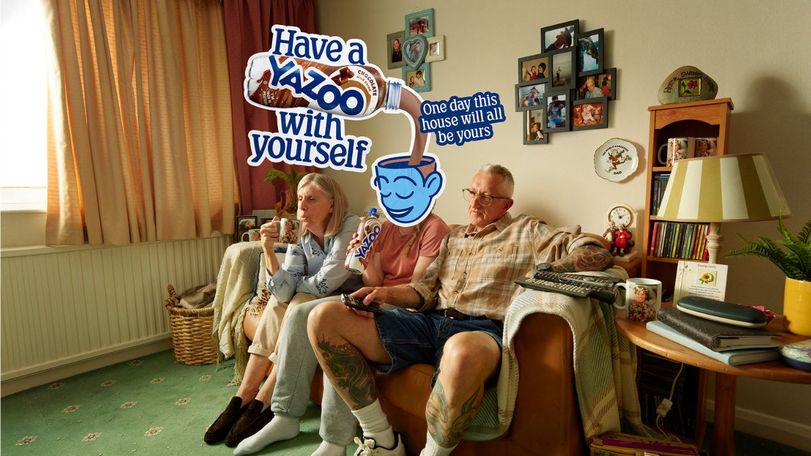
Yazoo is a good example. We were speaking to a generation that processes anxiety through humour and irony, so even the posters were designed as experiences. The more time you spent with them, the more you discovered. That changes the way you think about something as simple as outdoor advertising.
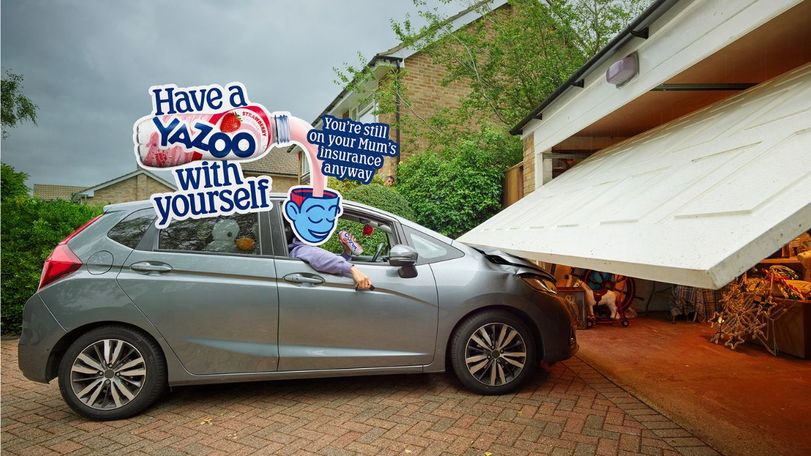
1/5
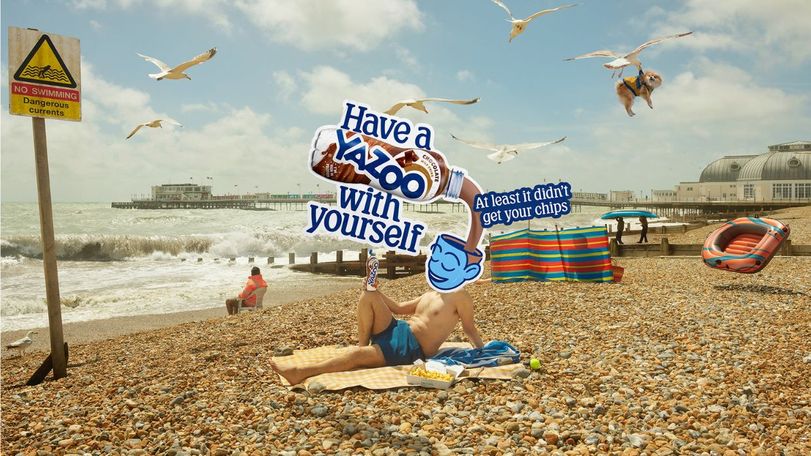
2/5
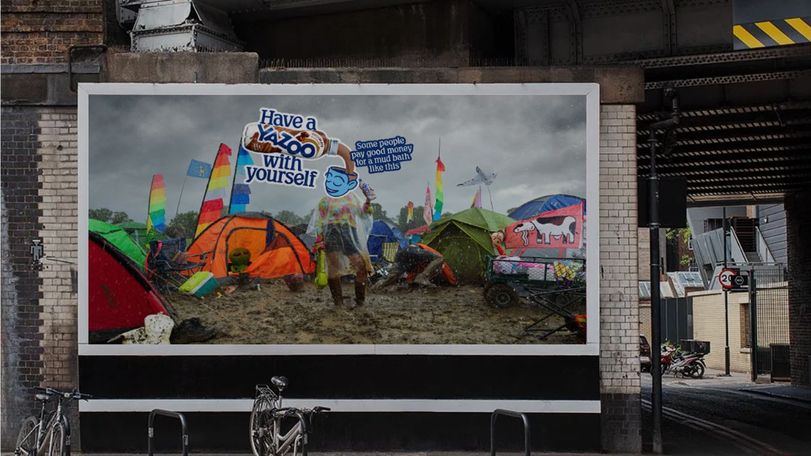
3/5
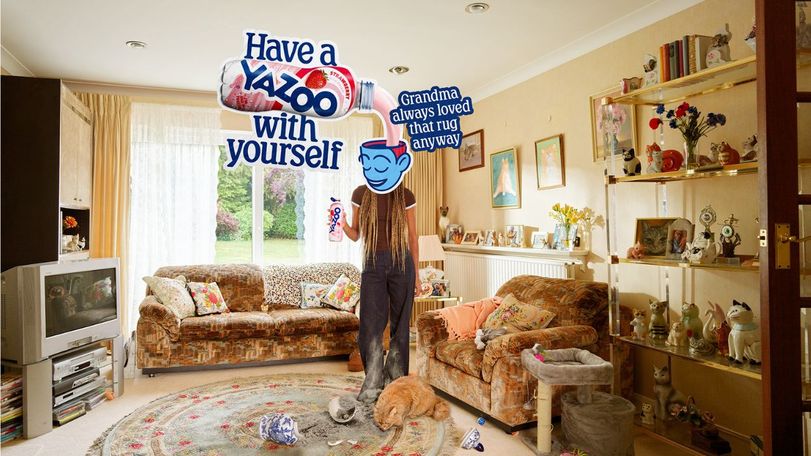
4/5
5/5


CS: So that's designed to become a long-term platform?
Higgins: The idea is about "pouring a bit of perspective". Everything else grows from that. You're not squeezing an advertising campaign into different channels; you're expanding a brand idea that was designed to live everywhere from the outset.
CS: Does the Village influence work even when it's not formally a Village brief?
Ripper: Absolutely. Yazoo was led out of London, but we still brought specialists into the conversation. Those perspectives help us build ideas that won't paint us into a corner two years down the line.
CS: Was that one of the reasons you came back to Havas?
Higgins: Completely. I never fell out of love with Havas. After the merger in Australia, R/GA was an incredible opportunity, but I always felt Havas was a sleeper network. If you connected the right people, there was enormous potential.
London felt like a restart-up: an established agency with a new leadership team and the chance to build something together.
Ripper: That's exactly what it's been. When I met Donna Murphy [Global CEO, Havas Creative Network and Havas Health Network], she told me: "Go and build an agency you're proud of." That's exactly what we've been empowered to do.
CS: Is the leadership team complete?
Ripper: Not yet. Finding the right chief strategy officer is a crucial next step.
CMOs are dealing with huge complexity, and great strategists have an extraordinary ability to simplify it. We took our time finding the right creative partner in Seamus, and we'll take the same care over strategy because when strategy and creativity truly work together, the results are transformational.
CS: So where are you in Donna Murphy's rebuild?
Higgins: We're picking the taps.
Ripper: We're poised to go. We've already got strong momentum with work for Anchor, Yazoo, Birds Eye and our award-winning Early Years campaign, and there's much more to come.
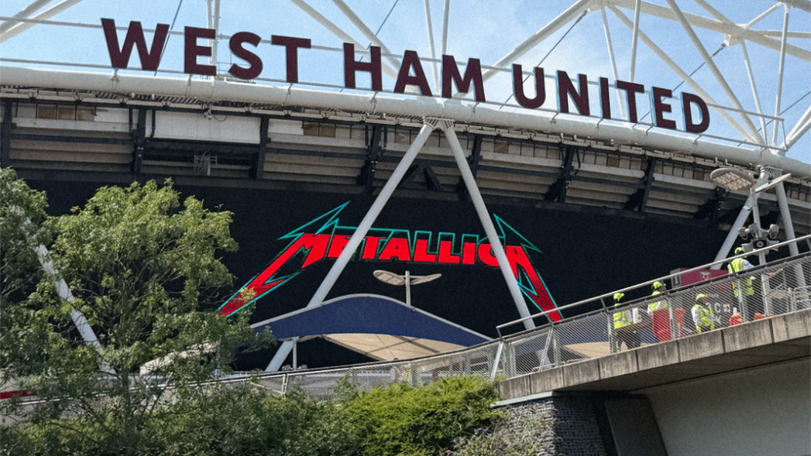
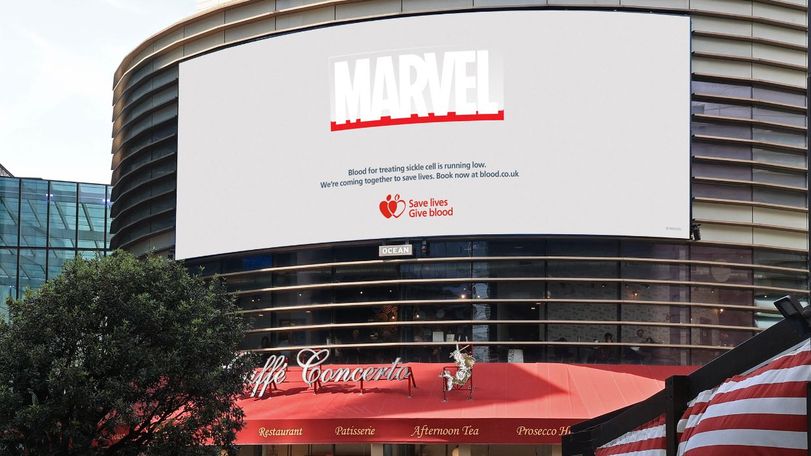
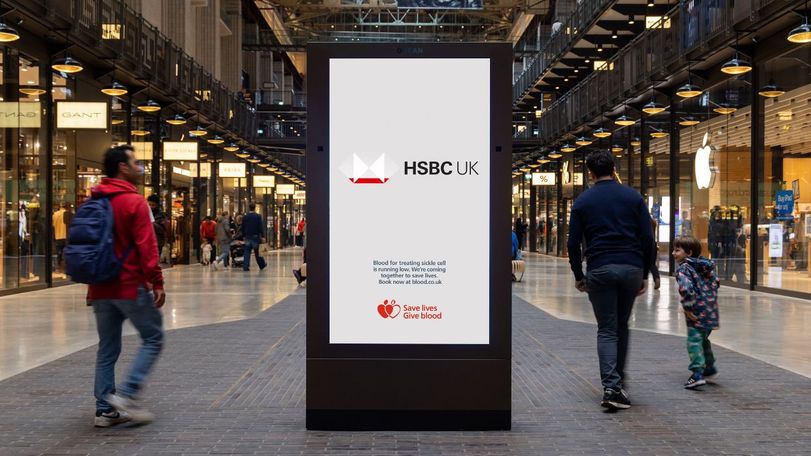
Higgins: What impressed me before I joined was the resilience of the agency. The long-term partnership with Vanish around autism, and the NHS Blood campaign are proof of what this team can achieve when it sticks with an idea.
1/3
2/3
3/3


CS: How do you describe what you're building?
Higgins: We talk about creating 'unignorable brand worlds'. Years ago, agencies talked about making the impossible possible. Today, technology has made almost everything possible. The challenge is creating something people simply can't ignore. We're operating in an attention economy. If your brand is ignorable, it's invisible.
Ripper: It's an intentionally awkward phrase because it makes people stop. For us, an unignorable brand world is strategically robust, creatively brilliant and flexible enough to live anywhere. We can stress-test it across the Village, build the design system around it and bring it to life however a client needs.
That's what modern brands require, and it's what we believe we're uniquely placed to deliver.
CS: Is that your agency positioning?
Ripper: Not officially. Havas has its own network positioning. This is more our creative philosophy and the way we want everyone in the agency to think.
Higgins: What's encouraging is that the next generation already thinks this way. They don't see themselves as writers, art directors or designers. They see themselves as hybrid creatives building brand worlds. That tells me we're heading in the right direction.
Share


