/f/102932/1920x1080/5a4c7f07ca/children-s-books.jpg)
From book hand-me-downs to cultural change: Liberty Venn on making every child a reader
The founder of the Children’s Book Project on why owning books matters, the millions of children’s books going unloved, and how M+C Saatchi is helping reverse book poverty
07 October 2026
A children’s book can look like a small, relatively inexpensive, thing. But for a child who has few or no books of their own, owning one can mean something much bigger: a sense of possibility, belonging and identity.
That is the thinking behind The Children’s Book Project (CBP), the charity founded by CEO Liberty Venn, and supported by M+C Saatchi, to tackle book poverty by collecting pre-loved children’s books and getting them into the hands of children who need them.
Its ambition is increasingly moving beyond simply distributing books, however, towards changing the way people think about them and particularly the idea that a book a child has outgrown can, and should, have another life.
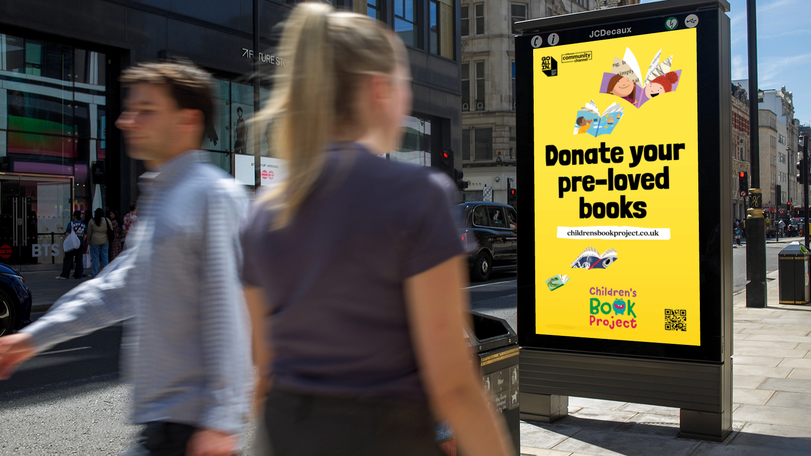
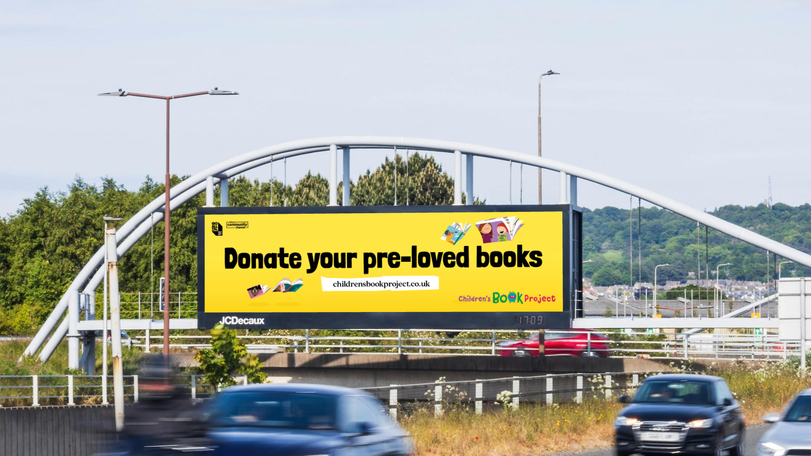
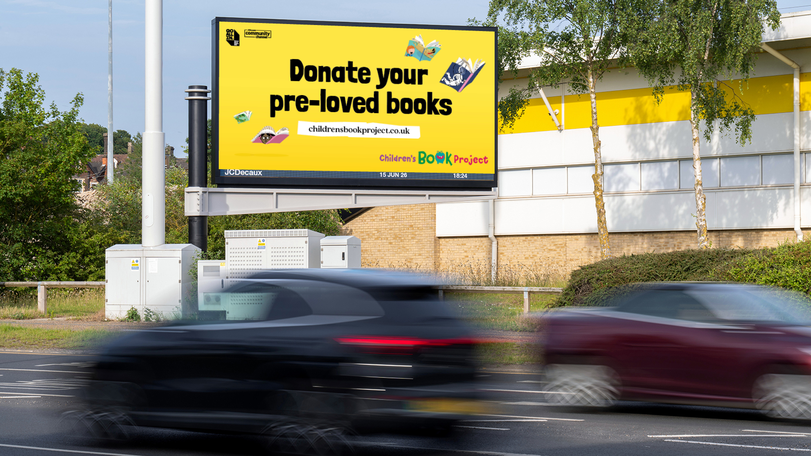
That is where M+C Saatchi comes in. The agency, which has made the CBP its Charity of the Year, has helped the organisation broaden its story from the mechanics of book collection to the bigger cultural question of how to get more books into children’s homes. Its work has included a campaign encouraging parents to pass on books their children have grown out of, as well as a recent seminar bringing together voices from business, publishing, and literacy to discuss how book poverty might be tackled collectively.
1/3
2/3
3/3


Venn spoke about why owning a book matters as much as having access to one, why Britain’s millions of unused children’s books represent a huge untapped resource, and how M+C Saatchi is helping the CBP turn the simple act of passing on a book into something that could become as normal as handing down outgrown clothes.
You focus on children owning books, rather than simply having access to them. Why does ownership make such a difference to a child’s relationship with reading?
Almost all the schools we gift to have their own foodbank or signpost their families to the nearest one. A lot of them have a washing machine running throughout the day to wash school uniforms. These families simply cannot purchase their own books, and their children are all too aware of this. If nothing else, to have the opportunity to freely choose from a large selection of beautiful books they’ve seen in the window of Waterstones and that their peers are reading, builds these children’s self-esteem. As the Head Teacher of a school we gift to in North Kensington once said to us, “It shows our children that they deserve to own these lovely things.”
At CBP we talk about this and we also talk about ownership giving children a comfortable relationship with books – to take them for granted, to lose them down the side of the bed and find them again.
We know that parents in homes with fewer books will read books in the school bookbag judiciously, but that they won’t necessarily be left out for children to simply have around the home. The presence of gifted books in the home simply means more opportunities for children to read informally, to have stories at bedtime – to have the same story read to them night after night. This is key – when children own their own books, they begin to own the language – they can go into school and role play the characters.
We also hear from teachers that owning their own books gives children the chance to develop a sense of who they are as a reader. This reader identity is key to them feeling confident when browsing for new books and when voicing their likes and dislikes.
There are millions of children’s books sitting unused in UK homes. Why is it so difficult to turn those existing books into a resource for children who need them?
To meet the demand we already see from schools we need to scale our operations sustainably. We’ve got a robust operation that will comfortably sort and gift well over 1m books this year, but this doesn’t in any way match the size of the opportunity. We also recognise that books shouldn’t necessarily be moved across the country unless we are able to take advantage of empty space in lorries moving those routes anyway (backhauling opportunities).
We’re gifting 1.4 million books this year but if we were to meet the current demand from schools, prisons and community groups we’d need to increase this to 2 million books. We’d also like to work with other charities in the sector to identify where our books might complement the work that they’re doing.
"M+C Saatchi has brought an external perspective that has challenged us to look at the bigger picture: the systems and cultural assumptions that sit behind book poverty and firstly through their mumfluencer campaign and more recently through the breakfast panel, have helped us convene a much bigger conversation around the problem."
Liberty Venn, CEO of The Children's Book Project
You’re trying to make passing on outgrown books as normal as passing on clothes. What actually needs to change in people’s behaviour for that to happen?
We want to make the idea of book hand me downs commonplace for parents, just as they would pass on their children’s outgrown clothes.
We need to make it incredibly easy for parents to be able to pass those books on at the times that work for them, whether that’s a school milestone, Christmas or moving house. Readily available drop points mean that a parent will be much more likely to donate. We talk about the idea of seeding into parents’ minds at the point of purchase, the idea that this book could have multiple owners, that it can be enjoyed by multiple readers. The books that made your child laugh can now make another child laugh too. Personally, I’ve got a great memory of my son laughing his head off on the sofa at a David Baddiel book. We’d love bookshops and every book to carry a call to action to the reader: if you’ve loved me, pass me on. Stephen and Anita Mangan did it with their latest release – there is the most beautiful page in the back of the book inviting the owner to gift it on to CBP.
At a time when children are competing with TikTok, YouTube, gaming and now AI for their attention, what can a physical book offer that those alternatives can’t?
Physical ownership has a transformative impact on children’s relationship with books, as something tangible that can be held and ‘owned’, that can be lost down the side of a bed, read night after night and returned to, and as a visible invitation to read / to be rediscovered.
Physical books can become associated with people, places and moments, whilst a book can sit between a child and an adult. You can point, laugh, turn pages, reread a favourite bit and physically share the experience.
Seeing yourself reflected in books and having books around you can help a child think of themselves as a reader, whilst digital access can be temporary or conditional. A book becomes part of a child's environment and remains available whenever they want it.
What does M+C Saatchi bring to the CBP that you couldn’t achieve through the charity’s own communications and how has the partnership changed the way you tell your story?
M+C Saatchi has changed the scale and ambition of our story. As a charity, we naturally tend to tell the story through our own work: the books we collect, the children we reach and the impact we have. M+C Saatchi has brought an external perspective that has challenged us to look at the bigger picture: the systems and cultural assumptions that sit behind book poverty and firstly through their mumfluencer campaign and more recently through the breakfast panel, have helped us convene a much bigger conversation around the problem.
In turn (and it is early days for us for this), it has helped us see CBP less as an organisation delivering a service and more as a catalyst for changing behaviour and systems.
The campaign makes the act of giving away a book feel joyful and simple, while the underlying issue is inequality. How do you balance making the message positive without losing sight of the seriousness of the problem?
Tonally it’s important that we don’t adopt a ‘Robin Hood’ mentality (taking from the rich to give to the ‘poor’). Barriers to book ownership are multiple and not just socio economic whilst we don’t want to make children that are fortunate to own their own books, feel guilty in any way. Our comms are deliberately joyful and positive and evoke the simple pleasure that a child can gain from a book as well as the pleasure that can also be gained by passing on a book you’ve loved to another child so that it can be enjoyed again.
One of the main drivers of the charity we spotted early on is that parents respond with alacrity when given the opportunity to pass on their pre-loved books. They feel like they are making a positive contribution and are able to do so without having to make a financial donation. We’ve learnt that generally telling people about the opportunity to donate and the positive impact that these books will have is sufficient to prompt them to act.
You’ve already put millions of books into children’s hands. What would need to happen for you to feel that you’d changed the culture around children and reading, rather than simply delivered more books?
We work within a wider ecosystem of schools, community groups and other charities all contributing to children’s engagement with books, reading for pleasure, literacy and a developing sense of their reader identity. For us, success looks like children taking home books that they’ve chosen and feel excited about and want to share and read, and for future data points around children’s engagement with reading showing an upturn in the percentage of children that are reading for pleasure.

How can more people and organisations help and get involved?
We invite our corporate partners to:
Give books / facilitate gifting:
a. Use their respective platforms to tell book buying families about the untapped cultural capital on their children’s bookshelves
b. Invite their own staff to bring in their books to be gifted onwards to us.
Unlock their underutilised warehouses, vans, corporate volunteers
Unlock their funding so that we can scale to meet the size of the opportunity
We invite families that have books at home to consider any books they may have grown out of and to take these to one of our 700+ drop points across the UK.
Share


