/f/102932/400x400/e76f65c695/menno-kluin-cco-iris.jpeg)
New Wave Creatives
Menno Kluin: Life's Too Short To Be Mediocre
The global CCO of Iris on creative restlessness and why advertising still needs people with taste...and a healthy terror of boredom
10 June 2026
There is a particular kind of creative leader who arrives in a room already carrying a mythology: the art-school prodigy, the enfant terrible, the natural showman, the person apparently born with a Sharpie in one hand and a grudge against convention in the other.
Menno Kluin is not especially interested in that story. Or at least not in applying it to himself.
The global chief creative officer of Iris Worldwide talks about creativity with the precision of someone who has spent a lifetime studying where the magic actually comes from — and with the impatience of someone who knows how easily the industry can mistake noise for originality. Creativity, for Kluin, is not simply a matter of having ideas. It is the ability to absorb complexity, reduce it to something true, and then express it in a way that feels unexpected enough to jolt people awake. It is instinct, yes, but also taste, discipline, judgement and the thousand small decisions that separate the brilliant from the merely competent.
His own formation was not, by his account, wildly romantic. He grew up in a structured Dutch household — his father worked for the Dutch railroad; his mother taught music and worked with pregnant women — and he credits that order, rather than any bohemian chaos, with giving him space to think. A poster competition first alerted him to the useful thrill of making something better than everyone else’s. Rotterdam club flyers, Dutch graphic design, art direction and a marketing communications degree followed. So did a conviction that he did not want to be a cog in someone else’s machine.
That combination — the Dutch respect for design, the art director’s eye, the competitive restlessness, the allergy to boredom — runs through the way Kluin talks about the business now. He is nostalgic for a time when young creatives devoured D&AD annuals, memorised credit lists and learned by obsession. He is wary of the case-study culture that has made too much work feel engineered for juries rather than felt by people. He worries about consensus, about creative personality being sanded away, about an industry too often content with mediocre because mediocre is easier to sell, approve and survive.
But this is not a lament from a man pining for the old certainties. At Iris, Kluin is attempting something more contemporary and arguably more difficult: to build an agency that can do more than one thing well. Not the sprinter, he says, but the decathlete. Film matters. Craft matters. But so does the ability to draw from culture, society, niche audiences and broader systems, then shape all of it into work that feels alive rather than merely assembled.
It makes for a conversation that wanders — productively — from Paul Belford to Marina Abramović, from Picasso ceramics to near-death shoots in Africa, from the lost discipline of studying great work to the strange current resurgence of cinematic advertising. And beneath it all is a simple, stubborn belief: life is too short to be mediocre.
So what does creativity really mean to one of advertising’s more exacting creative minds? Let’s ask him.
Creative Salon: What does creativity actually mean to you?
Menno Kluin: The best creativity for me is very simple: it’s unpredictable, unexpected. I think a lot of people in the industry can come to very good solutions now, and even AI can come to very good solutions, but it still takes a person and individuality and a history and a perspective and a character and taste and all that stuff to break through what’s predictable. That’s the best creativity.
Can anyone be creative, now though, or is it still an innate talent?
Anyone can be creative to a certain extent, but it’s still a talent industry.
As a creative you have to be able to comprehend all of the industry’s complexities, and at the same time still take a laser focus on what you think is the truest, best solution that will have the largest impact. That is a skill in its own right. And then being able to express that in unexpected ways is an even more unusual skill that very, very few have.
I think the best creatives have the best confidence in what will resonate in the market, what will really fuel that flame, and that’s an instinct thing.
So what role did creativity play in your childhood to nurture this instinct?
Nothing. Literally nothing. But I do think my parents created the environment for me to be creative; they were very Dutch and very structured. In my family, we joke that my mother started planning next year’s vacation the moment we got home from this year’s vacation.
Here in the agency, I try to provide a similar environment where there’s clarity and simplicity so people know the rules, and can roam within that.
OK, then when did you first realise creativity might be your thing?
It’s weird to say about myself, but I don’t think it’s necessarily that I think I’m creative; I think I’m competitive. There was a clear moment: a poster design competition in the Netherlands. It must have been when I was 16 or 17 and I won it.
I won it for a very simple reason. Out of the entire class, I probably made the only poster that was legible. It was hand drawn and I’m so competitive - and sometimes obsessive - that if I made one tiny mistake, I would restart the entire thing. So I think my poster was the most legible of all. And then you’re like: ooh, I won something. Let’s do this.
That led to more graphic design, and the graphic designer world. My heroes at the time were a design company in Rotterdam called 75B. They did all the cool club posters. It was just incredible. I would be so excited when the new club posters went out. I moved through graphic design to creativity to art direction, and I studied to even be a client in between — I’ve got a degree in marketing communication. It was about accumulating skill sets, to have a wide variety and perspective on the totality of the thing.
Were you always trying to see the world differently?
On perspective, to be honest, I think most of my perspective and viewpoints are very, very niche, which is interesting because my creative interests are incredibly niche versus mass. But I do have the instinct to bring ideas down to the simple thing that then really stands out and pushes things forward.
I think the different perspective is more a result, for me, of a desire not to be bored. I like pushing for something that feels unfamiliar, just for shits and giggles, because I need it. I like to experiment. I like pressing buttons. It’s not that I’m an artist-artist. I think it’s more a quest for new and getting reactions. Getting reactions is still the ultimate thrill of our industry. And to do that, you have to do something left out of centre or right out of centre. You have to.
Was there anyone who helped shape your taste?
One of the first people I started working with in Rotterdam was graphic designer Martin Roedolf, and he was very instrumental for me. I am so obsessive and so focused and so competitive, I want to do things a certain way. He was not a traditionally trained graphic designer. He was actually a baker. He was a baker that one day decided: I’m going to be a graphic designer.
He was such a pure creative soul that psychologically as well, that helped me progress. He would just be like, no, that’s it, and just move with it. That flow state is very, very important. He was very instrumental for my growth as we were working together.
Bringing it back to the club scene, he was a dominant player in the local Rotterdam flyer club scene. I was naturally drawn to that, but I think he opened up a little bit more flow state and creativity experimentation and just making decisions quickly so that you can get further along.
Did you always know you wanted to work more broadly than graphic design?
With my personality type, having a sense of control is important. I didn’t want to be the third cog in the system. I wanted to be in a driving seat. I knew that very early on.
As an art director, I was really good, if I may say so, but I was not happy with the fact that within advertising, especially in New York, there were still four layers above it. There were multiple mediocre layers in between, and I just couldn’t handle that. So I’m like: okay, I have to move up if I want to be in control of my own destiny.
But the broadness of my role at the moment, and the focus for us as an agency, is just a broader palette of things that keep it interesting. Theoretically, would I just want to be an art director? Yes, but it’s also limiting. I still am very much an art director. Paul Belford is still my hero. That will never change.
But from the experimentation and learning and playing, I think those are the most exciting things. If there’s learning, if there’s growth, if there’s an unknown, that’s probably the biggest life experience. This industry still does that. It comes back to: fight boredom.
What is it about Paul Belford’s work that stays with you?
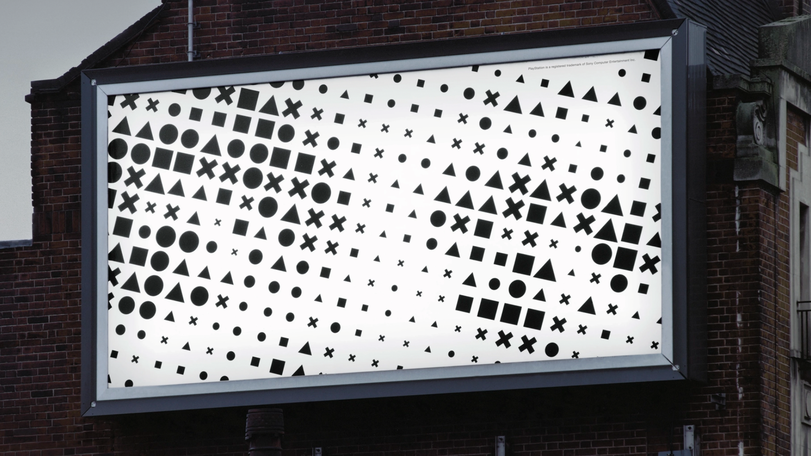
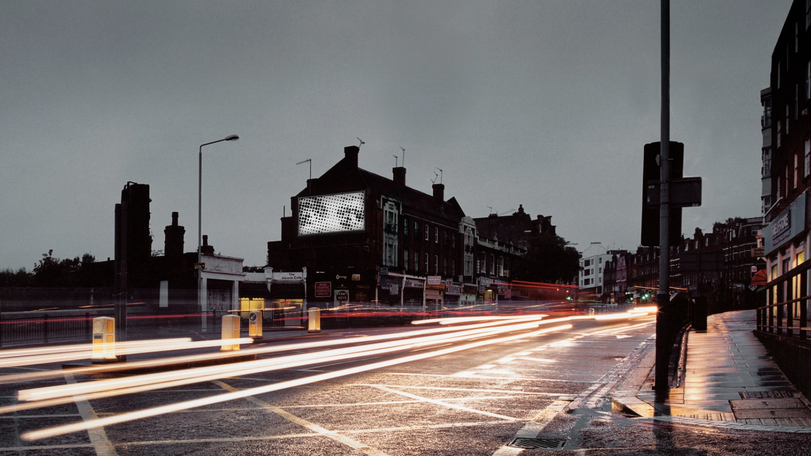
What makes him great is that everything has his sensibility. Although it’s simple, you can still recognise that it’s him. It has a light conceptual touch, but great aesthetics and great taste. It’s done the best possible way, which I love.
1/2
2/2


A pivot that I’ve made in my taste and style over the years is that I am very much into Dutch graphic design, 50s and 60s Dutch graphic design, which is still great, but minimal. In a capitalist commercial role, minimal is not necessarily always championed. I started morphing to a little bit more of a commercial look.
I figured out basic things, like even if I did a graphical solution back then and pulled it through Photoshop and added some texture, people tended to like it more than just flat graphical. The flat graphical in the commercial world looks unfinished, which it isn’t. But I still hold that up as the best of the best.
Do young creatives still study the work in that obsessive way?
No. I think we’ve 100 per cent lost it.
Back then it was discovery, learning, observation. I haven’t looked at certain annuals in a while, but I would literally know the credit list of the projects of the entire annual because you just read it 30 times.
You had to seek it out to get the knowledge. Now, because it’s so readily available, people just go: if it’s not entertaining, why would I watch it? I’d rather be on Instagram than looking at cases. And cases are such a distortion of the project itself. What are you even watching?
Because of case studies, because of sites, it has become more entertainment rather than learning and discovery. Even with the creatives here, I’ve said: take an individual creative and do a deep dive on that creative and learn. How does Gerry Graff construct his scripts very, very differently than certain other people? There’s so much to learn from that.
Does that make it harder to protect craft and taste?
I sent a note to the department yesterday: the best creatives make, out of whatever — let’s say you make 1,000 decisions in a project — the best creatives will make 980 of the correct decisions. But we are in a consensus climate; all meetings are larger groups, 10 people or more, and there needs to be consensus rather than the individual instinct, and that just makes things hard. Therefore real taste is hard because taste becomes a common denominator, therefore expression becomes harder, therefore emotion becomes harder. Very, very few creative leaders are able to showcase their personality still in the work to such an extent. With Paul Belford, on a smaller scale, because it’s just a poster or an ad — not to diminish that — you can see him in it. And the best ones still today do that.
Has the industry become too willing to accept mediocre work?
In the UK, the advertising stuff that I’ve loved from the UK over the years, it’s where creativity edges closer to art. It’s still commercial creativity, but it crosses a border. Any Jonathan Glazer-type commercial, it transcends out of commerciality into the world of art. I would say that London excelled at transcending mediocrity because of that. Which may have eroded a bit due to global councils and group consensus. But it still exists in pockets, maybe that was always the case anyway.
Whose work excites you now?
I would have to say Felix from Mother. You can see his persona. You can see that he’s a thinker. You can see that he is a creative with a sense of film, a visual way of thinking. Although he’s a writer, I think he’s very, very strong, and that clearly shows in the work.
Sam Shepherd at Uncommon NY is building out a particular provocative style. He did the 'Lost Class' project that won everything and I think he got a taste for stuff that rubs up again the norms.
There’s a cinematic trend I find fascinating. The trend of the last two years is cinematic and film — the thing that was pronounced dead 15 years ago. But the best agencies at the moment excel at that. No longer so much the adrenaline-thrill, below-the-line type stunts, but it is film that is dominant again I think.
So how would you describe what you are trying to build creatively at Iris?
We are more a decathlon-type agency rather than sprint. Rather than excelling at a singular event, we’ve chosen the hard path to do everything really well, for a very simple premise: I think that’s what clients need and want, therefore results will show up, therefore growth will show up.
There’s no one silver bullet answer to anything. You have to have more of a broad approach.
The trick of that is you have to find larger teams of people that work together. The trick of that is you have to stretch budgets further. You have to have levels of specialism that can work together. In the end, the human experience still comes back in providing the most difficult types of solutions, but I think it’s the right solution.
My best-case scenario is still 7-Eleven. I ran 7-Eleven for a number of years in the US — incredible client called Marissa Jarratt, who really led with creativity and positivity and an embrace of the philosophy that we established with her, which was from niche to mass. Niche audiences give you more interesting, contextual, creative clues to inform creativity at all levels of the funnel, finding impulses in culture and society and then having that influence the above-the-line thing.
If you’re selling frozen broccoli, you’re going to end up with similar mass insights. But to have that infused with different creative contextual cues out of society that have already resonated, I find very interesting. We’re not there yet, but we will get there.
Is there work coming from Iris that shows that direction?
We’re trying to put impulses or pulses in the system to drive up the standard and creativity throughout. The first thing that I’m doing at the moment is widening the spectrum of type of work that we do.
At a previous agency, 360i was very digital-social first. They were known for 'Dunk in the Dark' for Oreo. I started doing, rather than sticking to this area, out-of-home or a print ad to open up everything else in between and start to learn and do those things correctly so that there’s more cross-sell long run, and different influences. At the moment we are preparing great projects for World ID, Hula Hoops, Stamma and Yes charity among many others.
Creativity is almost like a living organism that evolves and tweaks and adjusts. I think I feed off what is the expression of creativity in society, in the mindset of the people out there, and fuse that in; otherwise everything I did would just be an expression of me. I think the best work is still an expression of me, but it’s me accumulating things together and shaping it into something new.
What gives you that adrenaline shot of inspiration?
Actually, you know what I’m craving? This is going to sound weird, but about eight years ago I did a lot of pro bono stuff for a charity called Water Is Life, and we were shooting in Africa and had four or five near-death experiences on the shoot. I’m kind of craving that.
It’s the thrill of it and the storytelling that comes after. And you create stronger bonds with people when you go through that. I still like those people that I did those shoots with. We text every day. Isn’t that the fun of it? A shared experience that is truly out of the ordinary, that is extraordinary.
Another example is a shoot on top of when World Trade Center Six was being built, looking out on World Trade Center One. We go up in the construction site and we did a shoot with New York City Ballet. You go up at sunrise and you’re with the best of the best ballet dancers in the world, and you’re shooting and New York is in the background, and you went up this rinky-dink construction elevator. That’s incredible. Where else do you get that? In finance? No, you don’t.
It’s a little bit thrill-seeking, it’s experiences, expression, and maybe all of those together.
For taste and creativity, one of my bigger inspirations is Chris Burden. He did an installation called Beam Drop where basically they had massive steel pillars and would drop them in cement from a crane, and whatever way they fell, that became the installation. I like those art experiments and then trying to think: what is the core? What is happening? What really triggers an emotion? Why is that something that endures?
Or Marina Abramović, The Artist Is Present, where it’s just the artist sitting in the gallery and staring at the public. I find that fascinating. It’s such a simple human moment, but so memorable and so powerful. To digest what that is and then try and implement it into more commercial thinking - I love that.
What would you say to young people thinking about advertising now?
Work for the right people. As simple as that.
There’s still incredible opportunity, there’s still incredible career progression, there are still incredible experiences to be had. If you learn from the right people, you build up your confidence, you have the right set of standards, you have the right set of references, you have the right process. It can still be incredible.
Last question: Imagine advertising is banned next year. What would you do?
Art dealing. And I’d specialise in one of two things: Picasso ceramics or Rembrandt etchings.
In the end, you can’t fight what your natural interests are, what your passions are, what you naturally seek out. When it comes to creativity, I think I’ve always been in tune with that. Just the willingness to accept what comes naturally and what you seek out.
Share


