/f/102932/1240x697/3b2bcb19bd/amanda-zafiris-canva.png)
Talon's Stories From The Streets
Stories From The Streets: Canva's Amanda Zafiris
Trips to her Iranian family in Los Angeles reminds Canva's head of Europe marketing of outdoor's ability to stop people in their tracks, tell stories in public and create shared cultural moments
13 July 2026
Amanda Zafiris has spent her career helping ambitious brands find their voice at moments of rapid change.
From agency life to some of the world's fastest-growing businesses, she's built a reputation for combining creative thinking with commercial growth, navigating industries that have been continually reshaped by technology and shifting consumer behaviour.
Canva, her current employer, has become a highly influential voice in the debate about creativity itself and as head of Europe marketing, Zafiris is helping steer it through a period where the tools of creativity are changing almost weekly — but where the value of original ideas has arguably never been higher.
It's a perspective built over a career that has spanned agencies, including Mediacom. scale-ups such as WeWork and global brands, including Mars. This belief in the power of creativity extends to one of advertising's oldest mediums — outdoor advertising.
Zafiris sees out of home (OOH) as one of the few places where brands can still create genuinely shared cultural moments — work that people encounter together rather than individually through an algorithm. This struck her on a trip to visit her Iranian family now living in Los Angeles.
In this latest ‘Stories From The Streets’ interview, in association with Talon, Zafiris explains why great outdoor advertising remains one of the most powerful expressions of a brand.

Stories From The Streets - Amanda Zafiris' Journey
I've always been fascinated by why people behave the way they do. In fact, I didn't set out to work in advertising at all. I studied psychotherapy, and it was while learning about psychoanalysis that I discovered just how much psychology influences advertising. That opened up a whole new world for me.
I found myself drawn into agency life, spending several years at MediaCom, where I worked across a range of clients before moving into global roles. One of the highlights was working on the launch of Mars' first global brand platforms for Snickers and Whiskas. Sitting on the brand boards and helping shape campaigns that needed to work across different markets taught me an enormous amount about balancing consistency with cultural relevance.
After that I wanted to understand life from the client side, so I joined WeWork. What followed felt like working for several different companies in the space of six years. I arrived during the hyper-growth, SoftBank-backed era, experienced leadership changes, an attempted IPO, a successful IPO, the pandemic and, eventually, Chapter 11. It was an extraordinary education in marketing through uncertainty.
Today I lead Canva's EMEA marketing team, having joined in 2024 to build the brand's presence across the region. But one of the experiences that continues to shape how I think about advertising didn't happen at work at all. It happened while walking through a neighbourhood in Los Angeles.
My family is Iranian, and like many families who left after the revolution, we have relatives in California. Los Angeles has one of the largest Persian communities outside Iran, so much so that it's affectionately known as "Tehrangeles". I visit every year, but I remember going when I was about 18 and beginning to realise just how much of my heritage existed there.

Growing up in London, it was never easy to travel to Iran, so there was always a sense that part of my identity lived somewhere I couldn't easily access. As I got older, I found myself craving that connection more and more.
Then I walked through Westwood, where my cousin lives.

Almost every storefront felt unmistakably Iranian. There were Persian restaurants, rug shops, florists and supermarkets. It felt like stepping into another world. But what really stopped me was the outdoor advertising: the billboards and posters were written in Farsi.
I'd never really thought about outdoor media in that way before. We often think of it as the last true broadcast medium, speaking to everyone at once. Yet here it was doing something incredibly personal. These weren't digital ads following me around because of an algorithm. They were giant public canvases speaking directly to a community that had built a new home thousands of miles away from where they started.

One campaign for a rice brand has always stayed with me. It wasn't for a local business; it was a major advertiser that had clearly invested time in understanding where this diaspora lived and how to reach them. Everything from the language to the typography and colours felt authentic. The advertising blended naturally into the neighbourhood rather than interrupting it.
Standing there, I realised I wasn't just looking at advertising. I was seeing a community reflected back at itself.

For people who had been displaced from their homeland, these billboards quietly acknowledged their culture and identity. That felt incredibly powerful. We spend so much time talking about personalisation through technology, but seeing a billboard in your own language, in a place where you don't necessarily expect it, somehow feels even more personal because it isn't speaking to you as an individual. It's speaking to a shared identity.
It also made me think differently about localisation. Someone had looked at the data, understood exactly who lived there and created work that genuinely belonged in that environment. Outdoor wasn't simply reaching people — it was helping define the character of the place itself.
That experience has stayed with me throughout my career, and it's probably why outdoor has always been one of the first places I look when I'm thinking about how a brand gets noticed.
OOH Case Studies: Canva brand campaign, Waterloo Station
The campaign I'm proudest of recently is Canva's special-build takeover at Waterloo.
I actually went on maternity leave after hiring a brilliant creative team, including our creative director Tom Carey, so they deserve the credit for bringing the idea to life. Coming back to discover what they'd created was one of the best first days back I've ever had.
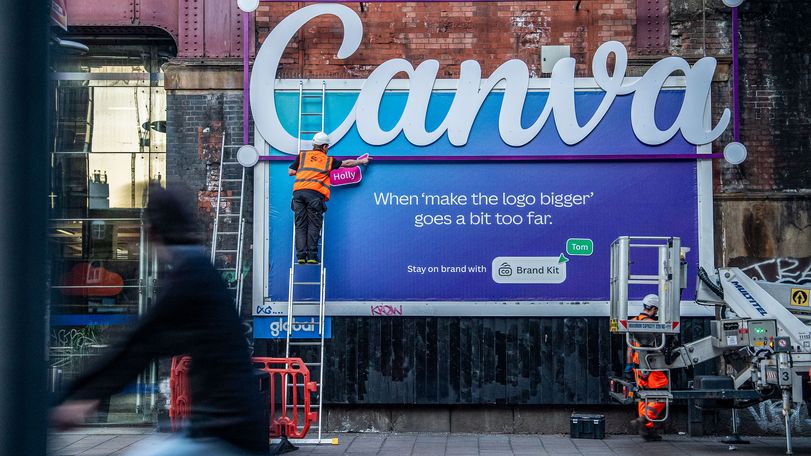
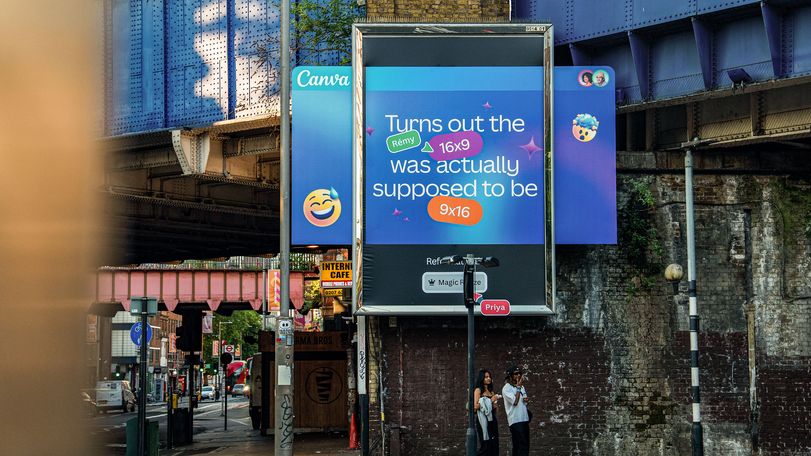
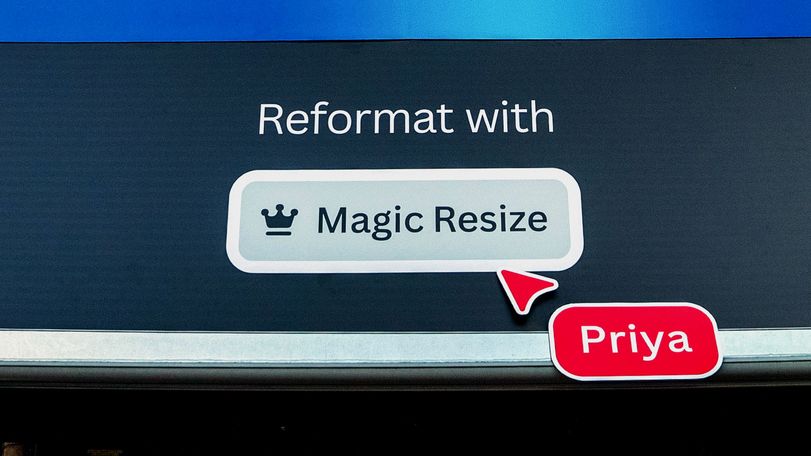
The team surprised me with a walking tour around Waterloo Station, revealing a series of special builds inspired by the everyday frustrations every marketer and designer knows all too well. For example, "Can we make the logo bigger?".
1/5
2/5
3/5
4/5
5/5


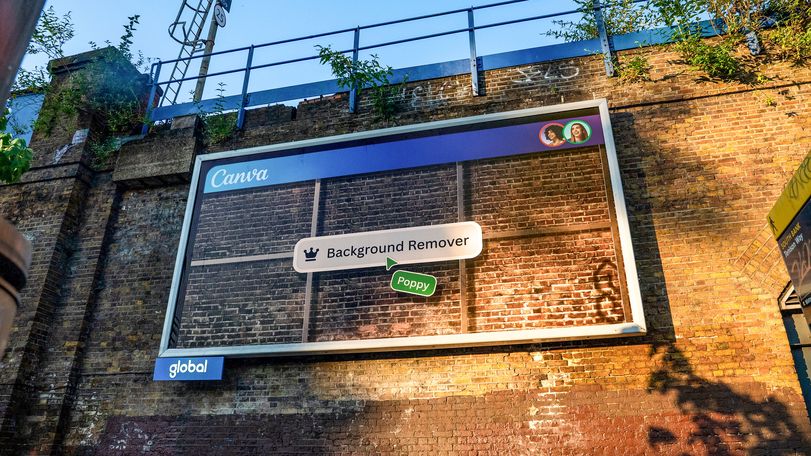
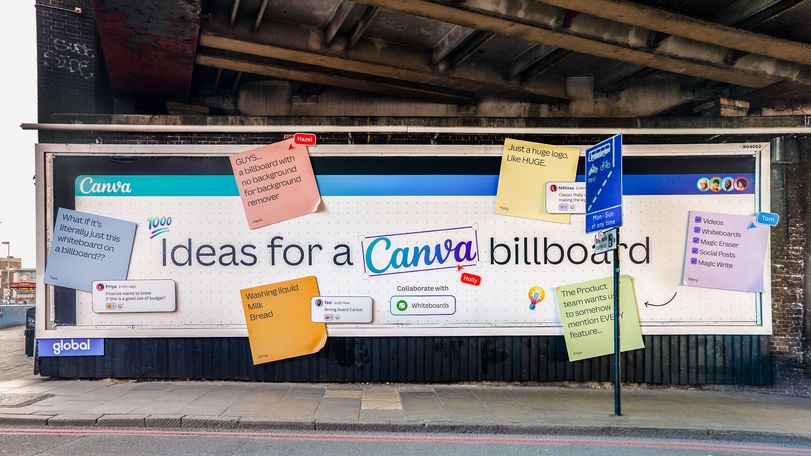
Our Background Remover feature literally removed the background from one execution so the brick wall behind became part of the ad. Another used oversized post-it notes and cursors to demonstrate Canva's Whiteboards feature. Every installation made use of the physical environment in a way that only out-of-home can.
Too often, outdoor is treated as an extension of another campaign, with the same creative simply resized for a different format. I've always believed it deserves a different role because it's so visible and because, done well, it can genuinely shape people's experience of a place.
The response completely exceeded our expectations. The week I returned from maternity leave, my LinkedIn was exploding with messages. People across the industry were sharing the campaign, laughing at the jokes and recognising the everyday truths behind them. From there it spread across Instagram and Facebook too. It was a brilliant reminder of just how much earned reach a genuinely creative out-of-home idea can generate.
For me, it reinforced exactly what I'd learned years earlier walking through Tehrangeles: the best outdoor advertising doesn't just occupy a space; it belongs there.
Whether it's a billboard written in Farsi helping a diaspora feel seen, or a playful special build making creatives smile on their morning commute through Waterloo, the medium has a unique ability to become part of the environment around it.
Too often, outdoor is treated as an extension of TV or another channel. I think it deserves to be the starting point for a different kind of creative thinking. When you embrace what makes the medium unique, that's when the magic happens.
Share


