/f/102932/1240x697/b15654288b/designer-at-work.jpg)
Designers: 'Mac Monkeys' No More
Design has become the discipline holding strategies together as brands stretch across platforms, products, and experiences as new design leaders emerge
15 April 2026
For much of advertising’s history, design has been treated as the final step in the process — the discipline tasked with polishing the work once the 'real' thinking and craft had already been done. The phrase “Mac monkey”, once pejoratively used to describe designers executing layouts, captured their place in the creative hierarchy perfectly.
But the role of design inside agencies is changing and recently agencies have been investing in this capability and elevating its role in their creds. The reason? It's clear enough — as brands stretch across platforms, products, experiences, and social channels, the discipline is moving closer to the centre of how ideas are shaped and built.
“I like to think about it [design] in layman’s terms,” says Lorenzo Fruzza, chief design officer at Havas London. “How would I explain what I do to my mum? I design brands and the things that express them to the world.”
Design’s remit, he explains, now stretches far beyond campaign visuals.
“Yes, we design campaigns and we design advertising, but we also design experiences. We design the brand identities themselves, and sometimes it takes us into completely different spaces. We may design products, we may design services — anything that sits within that realm of when a brand needs to communicate or express themselves to a consumer.”
That expansion into new areas reflects a broader shift in what design is actually for. “In many ways, the role of design in advertising is about translating ideas into visuals that people can immediately understand and feel something about,” says Matteo Alabiso, creative director of design at Ace of Hearts.
“Art is created to trigger a unique emotion in each viewer. It’s personal and often guided by individual taste. Commercial art, on the other hand, aims to trigger the same emotion across a wide and very varied group of people.”
The system behind the idea
Historically, branding and communications design often lived in separate worlds. Branding agencies focused on building identity systems and guidelines, while advertising agencies focused on consumer-facing campaigns.
“Brand designers would usually have sat in a branding agency and they would have had a particular methodology and the processes were often long and focused on the business — what the business is about and what it needs,” Fruzza says. “Communications designers have always been about what’s going to resonate with the consumer.”
That difference often created friction. “There’s always historically been a clash between creatives and brand guidelines,” he says. “Branding agencies have always been about order and structure and templated systems, whereas consumer-guided creative has been about impact that wants to cut through and resonate.”
But the growing complexity of brand ecosystems has blurred those boundaries and that delineation. “Branding and marketing are all the same thing now,” Fruzza says. “Your brand turns up in so many places, your brand needs to behave like an advert pretty much everywhere it lives.”
For Alabiso, that shift is less about channels and more about exposure. “People experience brands far more frequently than they used to,” he says. “It’s not just during commercial breaks on TV. It’s when you wake up and check your phone, when you walk down the street, through digital services, or through reviews and conversations online.”
This constant exposure has raised the stakes. “Visual and strategic consistency has therefore become much more important,” Alabiso says. “Strong brand thinking and a clear platform act as a kind of glue.”
Stephanie McArdle, head of design at BBH, sees that pressure play out in the day-to-day reality of campaigns. “The number of channels and ways a brand can engage with their audience is growing all the time,” she says. “Campaigns need to stretch and flex in more ways than ever. So the responsibility is on design to ensure this happens in a consistent way.”
Building a brand world
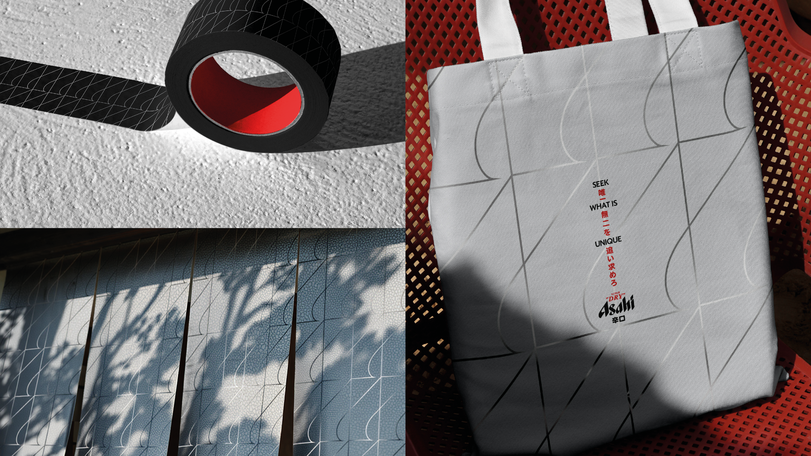
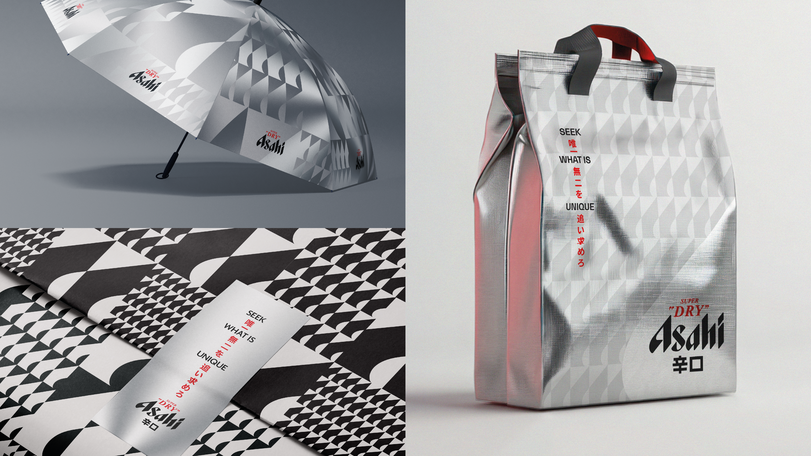
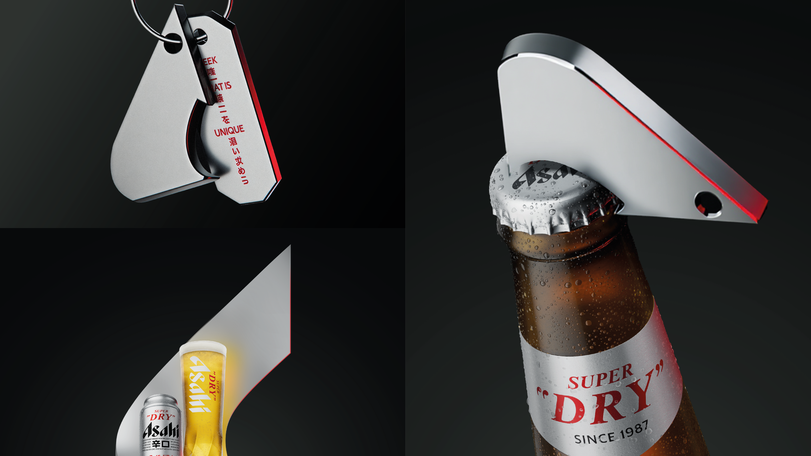
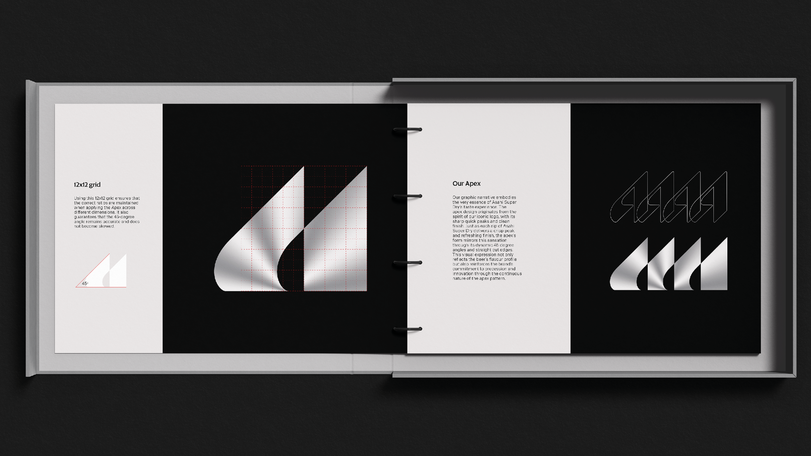
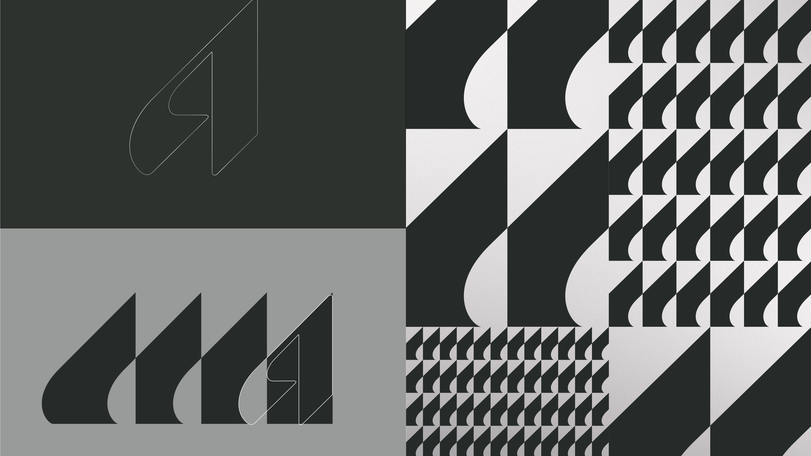
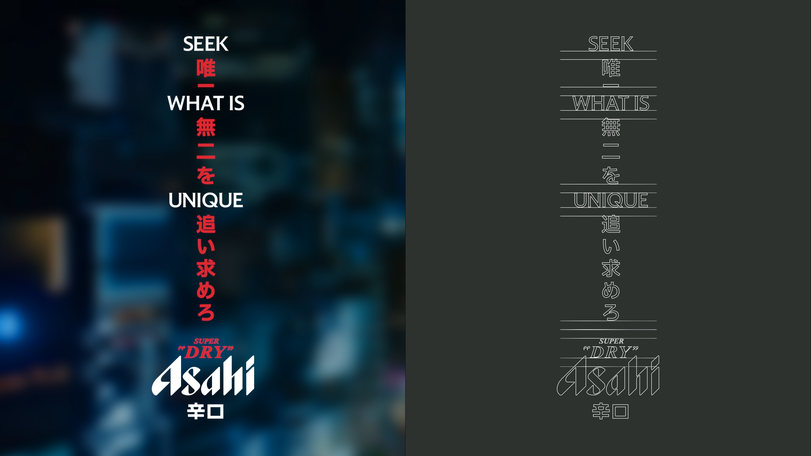
The shift towards 'systems thinking' is evident in how agencies now approach campaigns. Working on the relaunch of Japanese beer brand Asahi, Fruzza’s team developed a design system alongside the creative idea itself.
“What you’ve seen there is the product of two workstreams,” he explains. “There was the campaign workstream and the brand world workstream, and they were running at the same time and co-informing each other.”
While creative teams developed campaign concepts, the design team worked on the broader system that would support the brand across different contexts.
1/6
2/6
3/6
4/6
5/6
6/6


“As they were writing concepts for the TV, we were doing the parallel job of thinking: what kind of guidance, What kind of brand components does Asahi need to deliver that TV, but also deliver product messaging in Asia, deliver always-on merchandise, and inform their new pack design?”
The goal was to create coherence without rigidity. “The key thing we’re trying to sell to clients now is consistency — but it looks different now,” Fruzza says. “Brands need to be dynamically consistent. Less about matching luggage, same look and feel, more about a consistent feel everywhere the brand turns up.”
Alabiso frames that balance in similar terms. “When that foundation is strong, brands actually gain more freedom,” he says. “They can experiment with different messages and formats while still feeling recognisably themselves. That balance between consistency and flexibility is what audiences respond to today.”
The strength of the Asahi system became clear when international markets began extending it independently.
“My favourite piece of this work is a piece of work we [Havas London] haven’t done,” Fruzza says. “It’s the stuff Australia did. They’ve taken our dynamic brand world and executed new creative off it — it wasn’t from a toolkit and it wasn’t prescribed. They extended the story and nailed it.”
For global clients, such flexibility is crucial. “Their headache is consistency,” Fruzza says. “And their answer to that is often straightjackets, which local markets hate.”
McArdle says design plays a critical bridging role. “The design team is the bridge between the branding agency and the advertising agency,” she says. “We usually take what was created and expand on that world in a way that has impact and longevity in an advertising context.”
Craft still matters
At Droga5 London, creative director of design Dan Roberts says the discipline’s power still comes down to one thing: craft.
“Craft is the key word,” he says. “It’s the difference between ignorance and interaction, between something people scroll past and something that makes them stop.”
The work audiences see may last only seconds, but the thinking behind it takes far longer. “Days, weeks and months of strategic understanding, craft and design thinking gets distilled into a piece — or pieces — of communication,” Roberts says. “And focusing purely on advertising, the work we do might only get a split second to land.”
Alabiso agrees — but warns that craft is also increasingly under pressure. “Craft is key, but finding the time to truly craft something is rare,” he says. “Especially in the world we live in now, where everything is so fast paced and turnaround times are increasingly short.”
That pressure is compounded by the number of formats work now has to live in. “A TV ad gets cut down to six seconds and reformatted for a completely different aspect ratio,” Alabiso says. “A key visual has to work as a static image, in motion, five metres high on a billboard, and a few pixels tall on a phone screen. That’s where craft can sometimes suffer.”
Still, the fundamentals haven’t changed. “John Hegarty once said that a great piece of work is 80 per cent idea and 80 per cent execution,” he says. “A strong idea is essential, but the way it’s brought to life — the care, the detail, the precision — is what ultimately makes it sing.”
McArdle adds that awareness is key to cut-through. “If you want to stand out, you need to know what you’re standing out against,” she says. “Designers need a strong understanding of the brand they are working with and what they are competing for attention with — not just competitors, but what is going on in advertising generally.”
Moving upstream
The role of designers inside agencies is expanding as brand ecosystems become more complex - the shift from "big ideas" to "brand worlds".
“Design has always been held in high regard at Droga5,” Roberts says, “and now has completely equal standing with strategy and creative — often helping shape ideas rather than simply executing them.”
That shift also reflects the growing breadth of what designers work on. “It’s no longer just campaign assets,” Roberts says. “It’s brand systems, platforms and experiences that need to live coherently across multiple channels.”
“I admire work that sidesteps trends in favour of clearly communicating an idea. I’m not interested in work that feels like it’s just replaying references from an are.na or Pinterest board.”
Dan Roberts, design director for Droga5 London
For Fruzza, designers occupy a unique position within the agency structure. “Designers are half artist, half architect,” he says. “They can do the sexy stuff — they can make things look nice and craft it — but they can also think about how you systemise creative and what the important bits are that need to stay consistent.”
Creatives and strategists bring different strengths to the process, but designers often bridge the two. “Creatives are very good at getting around big ideas and strategists are very good at delivering insights,” Fruzza says. “But designers are maker-thinkers.”
McArdle sees that shift reflected structurally - as borne out by the number of agencies now shouting about their capabilities and talent. “You can see the importance of this play out in agencies as the roles EDD and CDO are created,” she says. “Design now has a voice at the top table.”
The AI question
Like all parts of industry AI is having an impact - indeed tthe rise of generative AI is already changing parts of the design process, but all three designers see it primarily as a tool rather than a replacement.
“We’ve been using AI as a real turbocharger,” Fruzza says. “It allows us to stress test territories and concepts and push things further towards proof of concept.”
The danger lies in sacrificing quality for efficiency. “Efficiencies can’t be at the expense of craft,” he adds. “There’s a lot of AI slop out there and there will be brands that are happy with that. I won’t want to work with them.”
Roberts agrees that the technology may change the pace of work, but not the importance of design thinking. “AI is speeding up some parts of the process that used to take hours. That doesn’t necessarily mean you get time back, but it does free the team up to apply more design thinking and craft in other places.”
Alabiso takes a similar view. “AI is a tool,” he says. “Figma is a tool. Photoshop is a tool. What really matters is how you use it, in which context and how skilled you are with it. In the end, the tool doesn’t define the work. The thinking behind it and the effort you put into it does.”
For McArdle, this evolution is constant. “The role is constantly evolving alongside the industry and this planet,” she says. “How to stay up to date with trends is ever-changing. Books and magazines are sadly not the go to anymore. The popularity of particular online press channels shifts. New tools are always popping up. AI powered tools being the latest hot topic. Project budgets and timelines get tighter and tighter. There is always something new to learn or a new challenge forcing you to pivot.”
Ideas that survive the process
These designers say the work they admire most is work where the original idea remains intact through the long journey from concept to execution.
“I admire work that sidesteps trends in favour of clearly communicating an idea,” Roberts says. “I’m not interested in work that feels like it’s just replaying references from an are.na or Pinterest board.”
He also highlights the challenge of producing strong creative work for major brands. “I admire — knowing how hard it must have been to get there — clever and creative work for really big brands,” Roberts says. “The recent Droga5 New York work for Bosch is a great example of this.”
Within Droga5 London, he says the projects he’s proudest of are those where the original thinking survived intact. “The work I’m most proud of is the work where we got to stay true to the initial thinking,” Roberts says. “Projects where the idea survived the process.”
He points to campaigns for Suntory-196 and Amazon Books, along with ongoing work with AXS, as examples.
For Fruzza, the most satisfying work is often where design thinking travels across multiple formats and contexts.
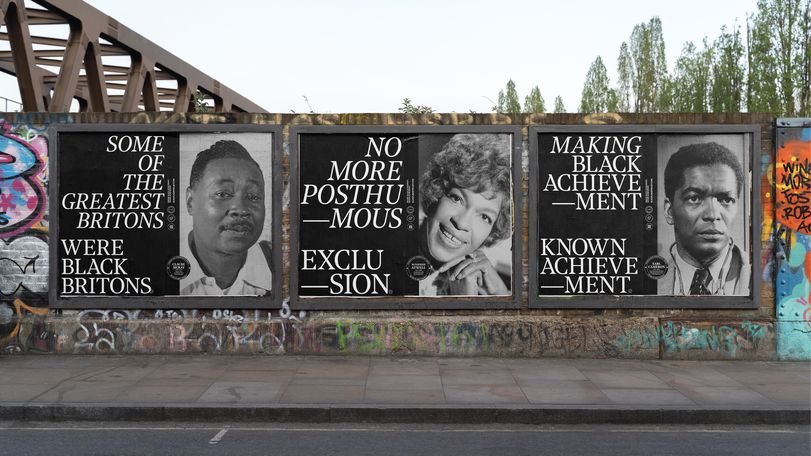
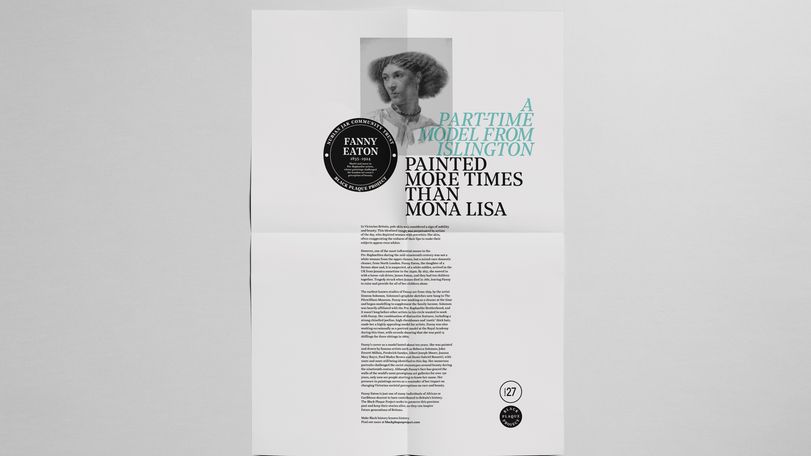
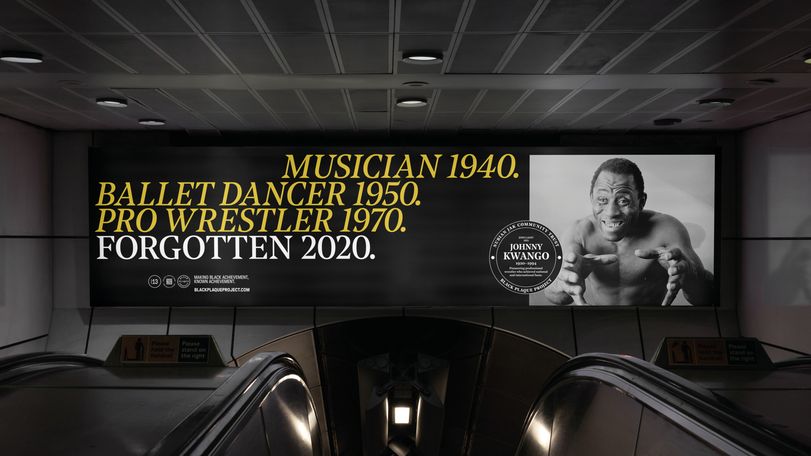
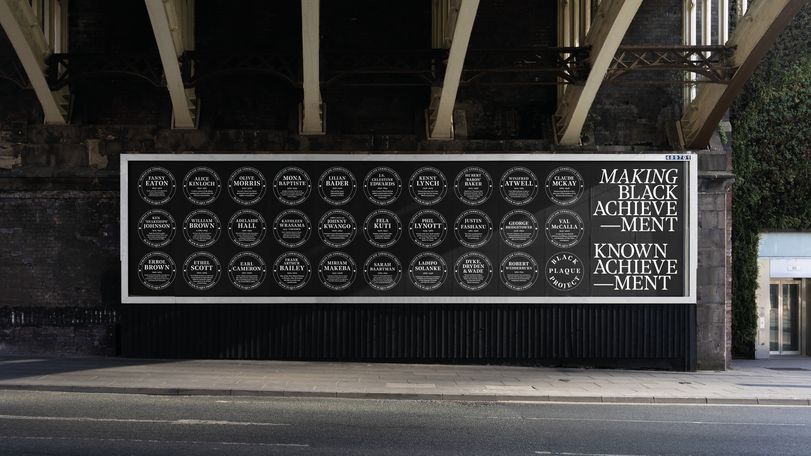
“It started as a stunt but developed into a full educational content hub, an ad campaign, print work and a podcast,” he says of the Black Plaques project recognising overlooked Black figures in British history.
1/4
2/4
3/4
4/4


“The same design story switched into storytelling mode on the website — it was really interactive and drew you in. It was dynamic brand thinking before we even had brand worlds as a concept.”
McArdle points to consistency of expression as a benchmark. “I absolutely love how CMAT has branded herself,” she says. “Her stage presence, her look, her custom clothing, her album artwork, her music videos — they are all very clearly expressing the same bold personality.”
She also highlights the importance of client belief. “I think the work I’m most proud to have been part of is Sainsbury’s at Wieden+Kennedy in 2016. It was probably a big moment for me as it was during that process that I discovered a real love for advertising. I worked with some of the best creatives in the business, who I learned a lot from. The work was a huge shift for Sainsbury’s and they had the confidence to fully get behind it, which paid off as it got them tonnes of positive feedback. It has been very rewarding watching what we set up initially play out for years."
From finishers to architects
If designers were once treated as mere 'finishers' or polishers in advertising, the discipline’s role now looks very different. “If you go back twenty years it was a rough place to be a designer in advertising,” Fruzza says, but today the outlook is far more positive. “There’s finally recognition of the discipline and the value it brings.”
In an era where brands live across dozens of platforms and formats, that value will continue to grow — not as decoration or touching up, but as architecture. The 'Mac monkeys' were once there to finish the work. Now they’re the ones making sure it actually works properly.
Share


