/f/102932/1240x697/5e540a4faa/jack-swayne.png)
meet the ceo
T&P’s Jack Swayne On The Rise Of The ‘&-Shaped’ Idea
The WPP agency has spent years joining media, creative, data and technology. Now, as AI blurs the lines between them, its UK leader says that model is becoming more valuable than ever
01 July 2026
Jack Swayne’s career has, in many ways, been a long apprenticeship in the art of seeing how commercial creativity joins up; this is something that holds him in good stead as leader of T&P.
He started as an intern at Dentsu in the early (and unfashionable) days of digital media, working in data and analytics, setting up HTML tags, learning the basics of coding and getting close to the inner workings of digital media. From there, he became a programmatic media buyer across paid search, programmatic display and, as Facebook and others began to reshape the landscape, paid social.
As it turned out it was a most useful place to begin: not at the glamorous showy end of the business, or trading TV, but in the nascent engine room of how digital media actually worked. This gave him an understanding of systems, channels, and technology that would shape the rest of his career.
From there came what Swayne describes as a “sideways move” into communications planning at Vizeum, at a time when digital was still too often treated as the quirky niche cousin of 'traditional' media. The logic was simple enough. Clients were tired of meetings in which one person understood television and another understood digital. Why not have someone who could see the whole thing?
That instinct has followed Swayne ever since: through his time running Pernod Ricard in the US, into iProspect where he worked across product, services, analytics, and strategy, then eventually to mSix&Partners, which was brought together with The&Partnership in 2024 to create T&P — a business built to join creative, media, production, data and technology around clients.
“I’ve always been trying to become more '&-shaped'”, he says, echoing T&P's internal mantra. “Taking on different skill sets and capabilities.”
It is a phrase that could sound like agency jargon were it not for the fact that Swayne’s own career rather neatly proves the point. He is not a media person pretending to understand creative, or a strategist dabbling in technology. He is one of the new generation of agency leaders shaped by the fragmentation of the marketing world, who has worked across most of it, and now trying to put it back together again.
At T&P, where he is now focused on the UK, that idea has become the centre of the pitch. The agency’s claim is not simply that media and creative should collaborate; it is that AI is making the old separation between them harder to defend.
“We’ve always believed in integration,” says Swayne. “But it’s got to be full integration, not just some collaboration.”
The moment of acceleration came, he says, when the agency first began working seriously with WPP Open (the holding company's agentic marketing system) and saw how quickly AI was beginning to blur the boundaries between disciplines.
“It’s hard to see where creative stops or media begins,” he says. “You want one team working around this platform, delivering stuff end to end.”
That was the logic behind the full merging of The&Partnership and mSix&Partners to create T&P. T&P had already been working in a more connected way on clients such as Toyota and News UK, but the formal creation of one business was intended to make that integration more decisive.
“We just think there’s a special alchemy of bringing media and creative together,” says Swayne. “Even if we’re only doing creative for a client, having media insight, or being able to demonstrate how it comes to life in media, adds a lot of value to the creative process. And it’s the same from the media side. Having access to really clever brand planners can power the media plan and make it better.”
That makes T&P something of a microcosm of WPP itself: plugged into media, creative, production, and enterprise solutions, but with the intention of joining those parts together for clients rather than handing them off between different businesses.
Swayne is diplomatic on the comparison with other holding company models. But he is clear that T&P's difference lies in being one business rather than a coalition of separate agencies asked to behave as one.
“If other holding groups create integrated models, it’s probably agency A, B, and C working together,” he says. “Ours is T&P.”
The risk, of course, is that integration becomes an internal model rather than an external benefit. Swayne seems alert to that. Since taking on his UK focus, he has tried to drag the conversation back from the (admittedly clever) internal plumbing to the whole point of it all in the first place.
“For all the chat we like to do about AI and integration, one of the things I’ve focused on is getting back to what it’s all in service of,” he says. “At its heart, T&P is the integrated ideas agency. We want to double down on creating brilliant integrated ideas that make our creative, our media, or whatever it is, much better and drive business growth for clients.”
A good example is Hawkstone, which hast just won a Silver Lion in the Entertainment category at Cannes Lions. The brand’s platform, built around the line 'Hard to Make, Easy to Drink', draws on the farming roots of the business and its connection with Jeremy Clarkson. But T&P’s work has stretched the idea well beyond a conventional campaign.
The agency created a farmers’ choir, auditioning real farmers and bringing together 40 of them to sing for the brand. On one level, it is a charming, human, almost old-fashioned advertising idea. On another, it has become a test case for how AI can extend a creative platform at speed and scale
T&P has built a tool that allows pubs serving Hawkstone to generate their own localised ads. A pub can input its name and location and the technology will automate the choir singing a song about that pub, with relevant details (including local landmarks) worked into the execution. It can also create other localised marketing collateral.
“We’ve got this very clever innovation team within T&P,” says Swayne. “Their job is to test all the tools, whether WPP tools within Open or other AI tools on the market, and push them to the limits.”
The system uses agentic technology to connect a series of specialist AI agents. One writes the strategy, drawing on data and insight. Another creates the script. Another generates the voices. Another handles the video and movement. The result, says Swayne, is a video output within ten minutes that is “nine out of ten ready to go”.
What makes the Hawkstone work particularly interesting is the marriage of the gloriously analogue and the highly automated. A quaint choir of farmers at one end; a sophisticated AI-powered local marketing engine at the other.
This, for Swayne, is the point of an integrated idea. It should be able to stretch.
“We talk about '&-shaped people'”, he says. “People who might be specialists, but can work with others and broaden their skill set by working in more integrated teams. But there are also '&-shaped ideas'. We want any idea to be able to stretch. It could be a big broadcast thing, a clever social idea, performance marketing, point of sale. We want ideas that can work in all those different places.”
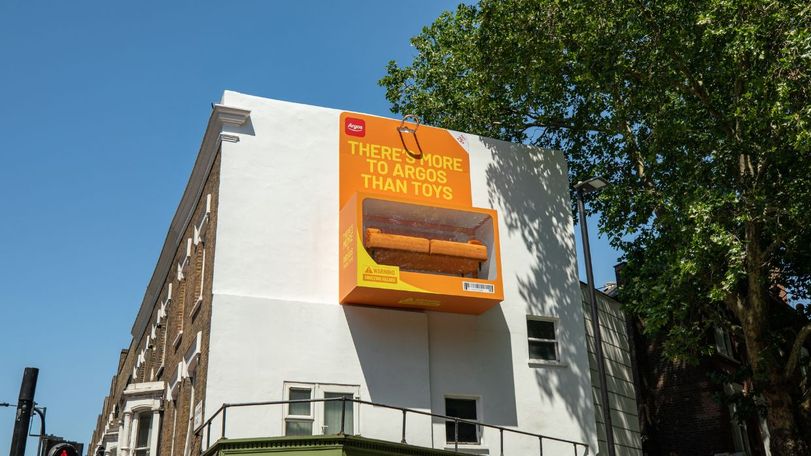
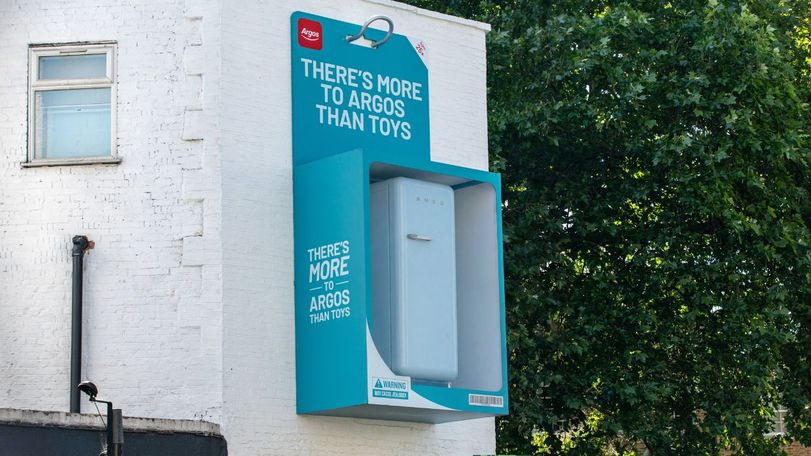
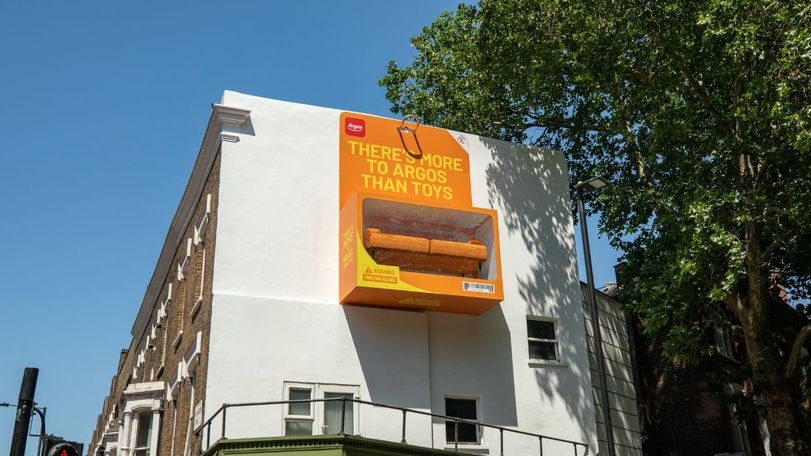
Argos is another example. Its “There’s more to Argos” platform has been built to work across big broadcast campaigns, social, promotions and out-of-home activations. It's not just a line for a TV ad (as would have been the case in the past), Swayne argues, but a vehicle that can travel through the whole customer journey.
1/2
2/2

News UK offers a more structural example and shows how the agency can adapt to suit client need. T&P’s embedded model with the publisher has evolved from Pulse into Mosaic, a more AI-enabled team inside the client’s business, based at The Shard and bringing together creatives, designers, producers, media specialists, and creative technologists.
“It’s got everything needed for a more automated digital machine,” says Swayne. “Every team member has access to the Mosaic Open AI, for instance. Some of our clients have access to it as well, so they’re using it to help write better briefs.”
The way of working is deliberately more agile. Rather than a brief spending what might have been two weeks with strategy, two weeks with creative and then moving to media, small squads of around five people work together from the start, using the technology to get to a stronger answer faster.
“Often the clients are included as part of that process,” says Swayne. “Because it’s an embedded team, it has allowed us to move so much faster.”
For The Sun, that has meant creating an automated process that takes the day’s top stories via an API feed into Open, applies pre-built templates, creates social assets, and pushes them into Meta for media buying the same evening. For The Times, it has meant balancing a performance engine that drives subscriptions with broader brand-building work around the platform The Times Change. The Times Remain.
This platform has given the newspaper a way to speak to both permanence and change at a moment when trust in news is under pressure and the subscription battle is intense.
“The Times has moved into full subscription. Everything is behind the paywall. So what we’ve built as part of the Mosaic team is a hardworking performance engine that gets people signed up, but also reinforces The Times’ credentials and drives consideration,” he says.
The work is deliberately responsive to the news cycle, allowing the brand to react quickly to events and draw new audiences into the newspaper. One outdoor execution used AI to show what particular streets looked like in the past, linking the history of those places with The Times’ role in reporting through periods of change.
One execution in Birmingham, for instance, showed buildings after the Blitz. It was a way of making the The Times Change. The Times Remain idea feel less like a strapline and more like a living editorial truth: the world changes, but the need for trusted reporting remains.
The point, again, is not AI for its own sake, but rather in service of a human idea. “When it’s just AI, you can tell,” says Swayne. “It lacks that human emotional response. That’s why the Hawkstone choir works, even when you use a bit of AI in there, because it’s rooted in something.”
This is where T&P's story becomes more than a merger story. The agency has always had a habit of remaking itself, from Clemmow Hornby Inge to CHI & Partners to The&Partnership to T&Pm, and now T&P. It pioneered embedded client teams before “in-housing” became an industry obsession; it has been early into AI; and It has never seemed especially sentimental about protecting the old ways of working.
Swayne credits founder (and Hawkstone shareholder) Johnny Hornby’s entrepreneurial appetite for change as part of that culture. But he also sees the current moment as one in which the model itself needs to keep evolving.
“I think more and more clients will want joined-up solutions with clever people who are &-shaped,,” he says.
The internal challenge (as it is at most agencies) is talent. Swayne wants T&P to remain, as the agency likes to say, “the best place in people’s careers”. For him, that means three things: doing great work, learning, and having some fun.
“I want people to feel they are learning, doing great work and having fun,” he says. “Increasingly, that means making people more &-shaped. It doesn’t matter whether they’re a creative, a strategist or an analytics person. By working with people from different capabilities, sitting next to them, they will become better at their own specialism and broaden their skills as well.”
AI training is also part of that responsibility. T&P has invested in training people across WPP Open and other AI technologies, not because everyone needs to become a technologist, but because the future of the agency model depends on people being confident enough to use the tools without becoming subservient to them.
Swayne’s vision is therefore simple, even if the machinery behind it is complex: to make T&P the truly integrated ideas agency.
“We think the model we’ve got is the right model,” he says. “AI will continue to blur the lines between media and creative and production. So we’re going to carry on pushing it.”
For an agency built on the Power of &, it is a neat enough conclusion. The ampersand was once a promise of collaboration but under Swayne’s watch, it is becoming something more operational and more urgent: a bet that the future belongs not to the agencies that defend their disciplines (and might die on the hill doing so), but to those willing to dissolve the lines between them.
Share


